Humans, On Rights

Stuart Murray

Details

Humans, On Rights is an intellectual and stimulating conversation with human rights grassroots influencers, community leaders, policymakers, advocates and educators about their passion to become human rights champions. Humans, On Rights host Stuart Murray, the Inaugural President & CEO of the Canadian Museum for Human Rights will explore with his guest the power of a positive outcome when you connect the three human rights dots - Education. Mobilization. Take Action.

Recent Episodes

OCT 15, 2026
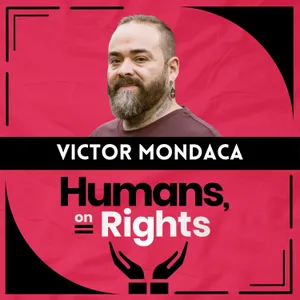
Victor Mondaca: Harm Reduction on Winnipeg’s Streets
Victor Mondaca once slept by the river in Winnipeg with nothing but the clothes on his back. Today he works in executive leadership in community-based housing and co-founded Nahuen Consultation with his partner Amanda, training frontline workers, librarians, students and everyday Winnipeggers in de-escalation, harm reduction and how to reverse an overdose.We sat down with Victor, who is Mapuche, to talk about what actually makes a community safer, and why pushing people out of sight makes things worse.We’re talking:Recovery as something built over time through culture, family and purpose, and the role shame plays in keeping people from helpWhat reconciliation between police and Indigenous communities would actually requireHow science can break down stigma around substance use, and why we treat some substances so differently from othersWhat real community safety looks like, and who gets left out when we push people out of sightVictor’s argument is simple and harder to practice than it sounds: if we want safer neighbourhoods, the people most at risk have to be part of the “we.” He has responded to multiple overdoses while out in our city because the person was in plain view. Move people out of sight, and outreach workers can’t find them either.As Victor puts it: “If the end goal is safety, then we need to look at the most vulnerable and ensure their safety too.”Victor Recommends:Reading: Drug Use for Grown-Ups by Dr. Carl L. Hart, which challenges common assumptions about drugs, drug use and drug policy.Reading: “Anatomy of a hush-up: How Health Canada buried the safe supply expert reviews” by Euan Thomson at Drug Data Decoded, an investigation into expert reports on safer supply that Health Canada never released.Watching: “Connecting to Culture,” a three-part series from the First Nations Health Authority on Indigenous harm reduction, told by Elders, peers and youth.Watching: “The Power of Addiction and the Addiction of Power” by Dr. Gabor Maté, a talk on addiction, trauma and disconnection that asks what has happened to someone rather than what is wrong with them.Learn more about Nahuen Consultation—including upcoming harm reduction training opportunities in Winnipeg—on their website.

45 MIN
SEP 17, 2026
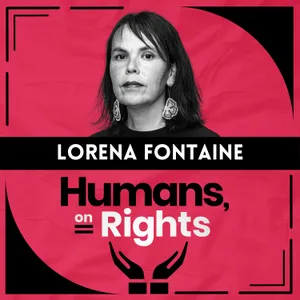
Dr Lorena Sekwan Fontaine: Linguicide and the Fight for Indigenous Language Rights
When Dr. Lorena Sekwan Fontaine was a child, her aunts and uncles would turn their backs or leave the room whenever they spoke Cree. She thought they were hiding something from her. They were: the language itself, learned the hard way in residential schools, where speaking it meant being hit. That memory sits at the centre of this conversation with Stuart Murray, a wide-ranging look at what Fontaine calls linguicide, the deliberate killing of a language, and what it means for Canada's human rights obligations today.Fontaine, a lawyer and professor and head of Indigenous Studies at the University of Manitoba, traces her path from a childhood split between English at home and Cree overheard in secret, to a legal career built on the realization that Canadian law had no real framework for what residential school survivors had lost. Section 35 of the Constitution recognized Aboriginal and treaty rights, but on language, she says, it was "an empty box." She and Stuart also dig into why the Indigenous Languages Act, which now folds language rights into Section 35, is a real step forward but still leaves Indigenous language rights far weaker in practice than the constitutionally entrenched rights of English and French speakers, particularly in education.We're talking:Why Fontaine resists the term "linguicide" becoming a place where the conversation gets stuck, when the real goal is moving forwardThe gap between Section 35's language protections and the constitutionally entrenched rights of English and French speakersHer own daughter's education, and the choice to enroll her in French immersion when no Cree or Ojibwe option existedWhether Orange Shirt Day is driving structural change or settling into symbolismHer vision for twenty-five years from now: Indigenous languages on street signs and spoken at the counter, not just in the classroomRead Fontaine's book, Living Language Rights: Constitutional Pathways to Indigenous Language Education, and watch the CBC documentary Undoing Linguicide, drawn from her doctoral research.
52 MIN
SEP 3, 2026
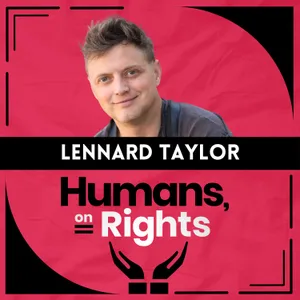
Lennard Taylor: Clothing as Identity, Dignity, and Belonging
Winnipeg designer, artist, and storyteller Lennard Taylor joins Stuart Murray to talk about clothing as identity, not just fabric. Lennard traces his path from a soccer career cut short by injury to two decades of painting, sewing, and dressing people out of his studio and boutique on Sherbrooke Street.Lennard pushes back against fast fashion, arguing that most people have lost the basic skill and instinct of dressing themselves with intention. He talks about his "bloodline" signature, a red stripe stitched into many of his garments as a symbol that everyone bleeds the same blood regardless of skin colour or language. He names his pieces after real Winnipeg clients — the Catherine pant, the Brenda Swing shirt — because his designs are, in his words, built from real community relationships, not abstractions.Much of the conversation is about zero waste: free repair workshops that teach basic skills like sewing on a button, turning worn or memory-laden clothing into sculpture instead of landfill, and a longer-term vision for turning textile waste into building material for housing. He closes on why community matters to him as a father, entrepreneur, and artist.We're talking:Fast fashion versus intentional, longer-lasting wardrobesThe "bloodline" signature and its human rights meaningZero waste, repair, and turning old clothing into artConnect with Lennard or find out about his upcoming sustainability events at LennardTaylor.com
46 MIN