Building your Brand

Liz Mosley

Details

Graphic Designer Liz Mosley wants all you small business owners to build businesses that you LOVE and feel confident about promoting. Through her decade of branding and design experience and with the help of her guests, she shares top tips to take the fear out of selling and building your brand. Produced by: Lucy Lucraft (Instagram @lucylucraft) Cover illustration: Matt Joyce (Instagram @mattjoyce_illustrator)

Recent Episodes

NOV 27, 2026
How to Handle Feedback Without Taking It Personally
In this solo episode, I'm reflecting on my changing relationship with feedback. I used to feel thrown by criticism but now I am actively seeking it out! I share what speaking at Adobe Max taught me about timing, self-worth and using feedback to make my work better. If opening a feedback form makes your stomach drop, I hope this episode helps you see it as useful information rather than a verdict on you. Key Takeaways Feedback is information, not a measure of your worth A comment on a talk, project or event reflects a specific experience in a specific moment. It does not define your talent, your value or whether you deserve to be in the room. Choose the right moment to receive it You do not have to read feedback immediately. Giving yourself space to finish the work, regulate your emotions and return with perspective can help you process it more constructively. Constructive criticism can make your work stronger The most useful feedback is not always the easiest to hear. It can identify a gap, clarify what was not working and give you something practical to improve next time. You cannot make something that works perfectly for everyone Different people arrive with different expectations and needs. A small number of critical comments does not cancel out the value your work brought to others. Look for patterns, then decide what to act on Separate feedback you can influence from issues outside your control, such as venue or audio problems. Use recurring, relevant points to make intentional changes. Confidence grows when you keep showing up Learning to receive feedback is part of building resilience. Each time you put your work out there, take in what is useful and continue, you build trust in your ability to handle the next response. Episode Highlights 00:00 – Why a video about Adobe Max feedback prompted this reflection 01:36 – Choosing when to read feedback and giving yourself space to process it 03:08 – Accepting that you cannot make work that meets every person's expectations 04:59 – How constructive criticism supports growth when you separate it from self-worth 08:27 – Using audience feedback to improve future events and work Mentioned in the Episode James Bardnard's Feedback reel
11 MIN
NOV 25, 2026
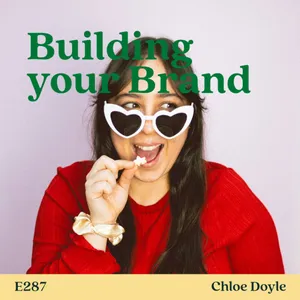
Why Independent Podcasting Is Worth the Risk with Chloe Doyle (The Chatty Freelancer)
You know how you sometimes follow someone online and just know you'd be best friends if they lived down the road? That's exactly how I feel about Chloe Doyle, host of The Chatty Freelancer podcast. In this episode, Chloe and I chat about how she went from selling Harry Potter portraits on Etsy to a graphic design degree and, eventually, a podcast. She tells me why she's decided to leave design behind and go all in on podcasting, and what it's like to be "in the trenches" of finding a sponsor for her Scottish creative industries TV-style show. We also talk about the stubborn belief that independent podcasts aren't a "proper" business, why platforming women matters so much to both of us, and how we realised we have far more in common than we thought. Key Takeaways Ask people what your brand does for them. Chloe asked for testimonials for an award and discovered that people saw The Chatty Freelancer as so much more than design. It's a brilliant way to get clarity on who you are and how you're perceived. Think of yourself as a media company. Even as a one-person business, you're producing content, building community and creating opportunities. Naming it can open up your thinking. Follow what you enjoy so you can stay consistent. Chloe is committed to filming on location, even though it costs more and isn't the "smartest" business decision. If it's different and it matters to you, it can be worth the risk. Lead with purpose when you pitch sponsors. Chloe is building a pitch deck, reaching out personally and inviting brands to be part of a bigger mission. She's also learning to know her numbers and ask confidently for what the work costs. Episode Highlights 01:00: Chloe's career story, from illustration college and hospitality to Harry Potter portraits on Etsy, a design degree and going freelance full-time 05:00: Why Chloe started The Chatty Freelancer, and how a uni branding project turned into a podcast 08:00: Letting go of the "designer" identity, and why Chloe now sees herself as a creative 22:00: Why independent podcasts struggle to be taken seriously, and how UK and US attitudes to sponsorship differ 26:00: Platforming women, the 700+ recommendations Chloe received, and the stat that women make up just 36% of people quoted or featured in UK media 34:00: Chloe's approach to finding sponsors, from her pitch deck to personal outreach and asking for £10,000 41:00: Why Chloe is committed to video and filming on location, even when it isn't the easy option About the Guest Chloe Doyle is a creative based in Scotland and the host of The Chatty Freelancer podcast, an honest, behind-the-scenes look at freelancing and creative life. Find Chloe on YouTube, Instagram, Spotify and Apple Podcasts by searching "The Chatty Freelancer". Support Chloe's Crowdfunder Website: https://www.thechattyfreelancer.com/ Instagram: @thechattyfreelancer Watch the Podcast on YouTube Mentioned in the Episode Jordan Schwarzenberg, whose talk on thinking of yourself as a media company stuck with me: YouTube Red Handed (the true crime podcast) Steven Bartlett DOAC Dish Podcast Chicken Shop Date Scottish Creative Network (run by Chloe's videographer, Greg) Come and say hello I would love to hear what you think of this episode, so please do let me know on Instagram where I'm @‌lizmmosley or @‌buildingyourbrandpodcast and I hope you enjoy the episode! End Credits This episode was written and recorded by me and produced by Lucy Lucraft lucylucraft.co.uk If you enjoyed this episode please leave a 5* rating and review!

50 MIN
NOV 20, 2026
What Does It Mean If You're Not Getting Rejected?
Today I'm exploring a question that came up in one of my rejection workshops: what does it mean if you are not getting rejected at all? While rest, stability and choosing a slower pace can be exactly right for some seasons, avoiding rejection can also be a sign that fear is keeping us from going after the opportunities we really want. I share how to weigh up the real cost of a "no," challenge the role of ego and pride, and make rejection feel less personal. Key Takeaways No rejection can be useful information If every opportunity feels safe and guaranteed, it may be worth asking whether fear is stopping you from pursuing the things you really want. Growth is a choice, not a permanent requirement You do not have to chase bigger, scarier goals all the time. The important part is choosing your pace intentionally, rather than allowing fear to choose it for you. The cost of not asking is often greater than the cost of a "no" A rejection may bring temporary disappointment, but never pitching can mean missing out on experience, confidence and opportunities that could change your path. Rejection does not cancel out your talent A client, collaborator or opportunity saying no is not proof that you are bad at what you do. It is simply part of putting your work in the right rooms. Your response to rejection shapes the outcome The people we admire are not usually people who avoided difficulty. They are people who learned how to move through setbacks, adapt and try again. Curate your visibility around your values You do not need to share every rejection online. Showing up in a way that reflects your values helps you build trust with the right audience while protecting appropriate boundaries. Episode Highlights 00:04 – The workshop question that inspired this episode: what does it mean if you are never rejected? 00:35 – When fear of rejection keeps you playing small and avoiding opportunities 01:14 – Choosing a slower pace intentionally versus letting fear make the decision 01:58 – Unpicking the fear behind rejection: disappointment, failure and other people's opinions 03:33 – A practical exercise: comparing the cost of rejection with the cost of never asking 05:05 – How ego and pride can make rejection feel more threatening than it is 06:30 – Why sharing rejection can encourage clients and peers to take braver action 08:25 – Visibility, professional boundaries and showing up online in line with your values 10:21 – Using a rejection chart to make brave action feel more playful and achievable Mentioned in the Episode Get my sticker chart here: https://www.lizmosley.net/rejection-sticker-chart Get my rejection prompts here: https://lizmosley.thrivecart.com/lets-get-rejected/ Come and say hello I would love to hear what you think of this episode, so please do let me know on Instagram where I'm @‌lizmmosley or @‌buildingyourbrandpodcast and I hope you enjoy the episode! This episode was written, recorded and produced by me If you like to watch your podcasts you can watch all of my solo episodes including this one on YouTube. If you enjoyed this episode please leave a 5* rating and review!
11 MIN
NOV 18, 2026
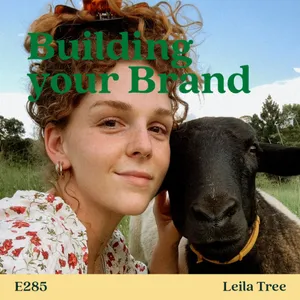
Handmade Logos, a Waitlist of 500 and Two Sheep: Leila Tree
This week I'm chatting to Leila Tree, a printmaker and logo designer based in Australia. I came across Leila on Instagram when one of her trial reels was going viral. She was gaining followers at an incredible rate and the enquiries were flooding in. I've loved following her ever since, because the way she runs her business is so different from what I see from a lot of designers. In this episode we get into what it was really like to go viral, how she grew her Instagram following, and how she handled hundreds of enquiries while still trying to make the work. We also talk about why she's built a personal brand around her sheep, and why she's doing things her own way rather than following the "you should be doing it like this" crowd. Key Takeaways There's a market for however you want to do it. Leila has never worked from a rulebook, and clients came to her asking for exactly what she was already doing. Consistency beats constant reinvention. The same reel format, the same colour for each logo reveal and the same visual cues make her work instantly recognisable. They also make it easy to create content. Go viral and you'll need systems fast. An admin assistant, a form instead of an overflowing inbox, and a waitlist all helped Leila cope with demand. Qualify your enquiries. Moving to a waitlist that clearly states the investment needed took her from 500 vague sign-ups to a far more manageable 70 serious ones. You can share your personality without sharing everything. Leila is a private person, but "the girl with the logos and the sheep" gives people something to connect with, and you don't need a glamorous life for that. Episode Highlights 01:43: Leila explains her printmaking process and how making artwork for pretend brands ultimately snowballed into her full-time job . 03:40: Leila's diverse career journey—spanning floristry, stained glass art, and disability support—that fueled her mission to build a work-from-home career . 06:30: The story behind the trial reel that went viral and how her aesthetic celebrates the "handmade-ness" of small businesses . 09:50: The reality of gaining 20,000 followers in four weeks and how her nervous system adjusted to the overwhelming volume of international inquiries . 14:50: The process of transitioning to a strictly qualified waitlist for 2027 to manage an unmanageable volume of leads . 16:20: How Leila is bringing on a graphic designer to help offer full branding suites while maintaining her focus on carving logos . 22:30: Why Leila consciously tailors her content to attract creative small business owners who will buy from her, rather than creating content for other artists. 30:00: The strategy of balancing personal privacy online while building brand familiarity through her pet sheep, Mabel and Matilda . About the Guest Leila Tree is a printmaker and logo designer based in Australia. She carves each logo by hand, prints it and digitises it for her clients, who are mostly creative small businesses. Leila's Instagram: @awassi.studio Leila's Substack: Awassi Studio Come and say hello I would love to hear what you think of this episode, so please do let me know on Instagram where I'm @‌lizmmosley or @‌buildingyourbrandpodcast and I hope you enjoy the episode! End Credits This episode was written and recorded by me and produced by Lucy Lucraft lucylucraft.co.uk If you enjoyed this episode please leave a 5* rating and review!

38 MIN
NOV 13, 2026
Speaking at Adobe Max: Losing My Voice, Recovery & A Career Milestone
In this episode, I'm sharing a behind-the-scenes debrief from Adobe Max 2026 in Miami, where I delivered the biggest speaking sessions of my career so far. I'm talking about the unexpected challenge of arriving with almost no voice, what it felt like to interview Chris Do in front of a live and online audience, and the wider conversations around AI, creativity and where our industry is heading. Key Takeaways Adapt the plan when circumstances change Arriving unwell meant I had to let go of trying to do everything at the conference and focus on recovery. Protecting your energy can be the most strategic choice when something important is ahead. Preparation gives you room to enjoy the moment After years of gradually building speaking experience, I was able to feel more relaxed on a much bigger stage. Confidence is built through repeated practice, not by waiting to feel ready. Human creativity still matters deeply The conversations around AI are complex and unsettled, but the talks that felt most meaningful centred people, craft and the impact creativity can have on our lives. Use technology to support the work that only you can do Assistive tools can remove repetitive, time-consuming tasks, creating more space for creative thinking, judgement and human connection. You do not need certainty to keep moving forward The creative industry is in a period of change, and it is understandable to feel unsure. Staying curious, reflective and connected to your values can help you navigate it. Episode Highlights 00:01 – Arriving at Adobe Max Miami and the challenge of losing my voice before my sessions 01:18 – Changing my conference plans to rest, recover and protect my energy for the stage 02:18 – Preparing for my biggest public-speaking opportunity yet, with support from Lois 03:17 – Interviewing Chris Do about rejection in a live-streamed Adobe Max session 04:56 – The keynote themes: generative AI, assistive tools and a renewed focus on human creativity 06:13 – Why the response to AI is divided across the creative industry 07:20 – Sitting with uncertainty, celebrating the experience and reflecting on a major career milestone Mentioned in the Episode A Creative's Guide to Surviving (and Loving) Rejection - with Chris Do and Liz Mosley Adobe MAX 2026 Miami Personal Work: Art for Fun, Profit, and Whatever Comes Next - Adam JK Adobe MAX 2026 Miami Come Say Hello I would love to hear what you think of this episode, so please do let me know on Instagram where I'm @‌lizmmosley or @‌buildingyourbrandpodcast and I hope you enjoy the episode! This episode was written, recorded and produced by me If you like to watch your podcasts you can watch all of my solo episodes including this one on YouTube. If you enjoyed this episode please leave a 5* rating and review!
9 MIN