ADHD Women's Wellbeing Podcast

Kate Moryoussef

Details

Are you struggling with the challenges of life as a woman with ADHD? Perhaps you need support with your mental and physical wellbeing, so you can feel calmer, happier and more balanced? Perhaps you’re newly diagnosed with ADHD – or just ADHD curious – and don’t know where to turn for support. Or perhaps you’re wondering how neurodivergence impacts your hormones or relationships? If so, the ADHD Women’s Wellbeing Podcast is for you. This multi-award-winning podcast, which won Gold in the Parenting category at the British Podcast Awards 2026, is hosted by Kate Moryoussef, an ADHD lifestyle and wellbeing coach, author, EFT practitioner, mum of four, and late-in-life diagnosed with ADHD herself. Each week, thousands of women just like you tune in to hear Kate chat with top ADHD experts, thought leaders, professionals and authors. Their powerful insights will help you harness your health and enhance your life as a woman with ADHD. From tips on nutrition, sleep and motivation to guidance on regulating your nervous system, dealing with anxiety and living a calmer and more balanced life, you’ll find it all here. The ADHD Women’s Wellbeing Podcast will help you live alongside your ADHD with more awareness, self-compassion and acceptance. It’s time to put an end to self-criticism, judgment and blame – and get ready to live a kinder and more authentic life. “Mindblowing guests!” ⭐️⭐️⭐️⭐️⭐️ “Brilliant and so life-affirming” ⭐️⭐️⭐️⭐️⭐️ “So, so grateful for this!” ⭐️⭐️⭐️⭐️⭐️ “Obsessed with this pod on ADHD!” ⭐️⭐️⭐️⭐️⭐️ ORDER NOW! Kate's new book, The ADHD Women's Wellbeing Toolkit! https://www.adhdwomenswellbeing.co.uk/adhd-womens-wellbeing-toolkit In The ADHD Women’s Wellbeing Toolkit, Kate Moryoussef shares the psychology and science behind the challenges faced by women with ADHD and lays out a roadmap for you to uncover your authentic self. With practical lifestyle tools on how to manage mental, emotional, physical, and hormonal burnout and lean into your unique strengths to create more energy, joy, and creativity, this book will help you (re)learn to not only live with this brain difference but also thrive with it.

Recent Episodes

NOV 12, 2026
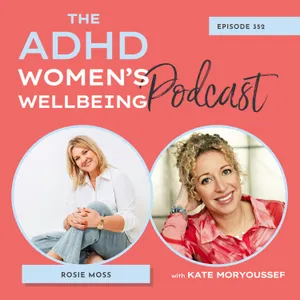
ADHD, Grief and Sobriety: What Happens When the Coping Mechanisms Fall Away
Join me live in Manchester this December for The Next Chapter — an immersive event for women ready to move beyond understanding their ADHD and explore what comes next with more confidence, self-compassion and permission to be themselves — surrounded by like-minded neurodivergent women who truly get it. Ready for your next chapter? Find out more: Book your place here⁠. ________________________________________ A gentle note before listening: This episode includes discussion of sudden bereavement, eating disorders, problematic alcohol use and addiction, mental health and grief. ________________________________________ Sometimes only when a coping mechanism disappears do we see what was buried underneath. The social anxiety. The masking. The overwhelm. The parts of ourselves we’ve labelled unreliable, chaotic or “bad at life”. And suddenly, with a different understanding, the story starts to look very different. In today’s episode of The ADHD Women’s Wellbeing Podcast, I sit down with Rosie Moss, award-winning podcast host, bestselling author of Widowed As F**k and founder of the Widowed Collective. ________________________________________ Ad⏐AG1’s best ever deal currently at under £50 per month when you take a quarterly subscription. Try AG1 for 90 days and see how it can help support your energy, mood and focus at: https://drinkag1.com/adhdwomen All orders include a Welcome Kit. Study results are held by AG1, 2023. ________________________________________ Rosie was widowed at 37 when her husband Ben died suddenly in a scuba diving accident, leaving her to navigate an unimaginable loss while parenting three young children. Several years later, Rosie decided to stop drinking. And not long after that came another huge piece of understanding: at 41, she was diagnosed with ADHD, followed by autism. This is such an open conversation about what happens when grief, eating disorders, neurodivergence, coping mechanisms and identity all collide. Rosie talks about looking back at the girl who struggled with eating disorders, the woman who relied heavily on alcohol, the jobs she couldn’t stick with, the appointments she forgot and the parts of herself she had labelled unreliable or “bad at life”. And then discovering there was another way to understand so much of it. We talk about the grief that can come with late diagnosis alongside the relief. The role alcohol played in helping Rosie manage social anxiety and mask for years. What sobriety revealed about what she actually needed. And how losing the person who had unknowingly provided so much of her executive-function scaffolding left her navigating both enormous grief and the practical realities of life alone. There’s humour here too, because that’s a huge part of Rosie’s story. And perhaps more than anything, there’s permission to look back at the versions of ourselves who were simply trying to get through and meet them with a little more understanding. In this episode, we cover: Losing Rosie’s husband suddenly and navigating grief with three young children Why lived experience and finding people who truly understand can be so powerful Humour, anger and the emotions we don’t always expect to experience in grief Rosie’s experience of anorexia and bulimia from a young age and the neurodivergence that went unrecognised Using alcohol to cope, mask and manage social situations How sobriety eventually led Rosie towards understanding her ADHD Being diagnosed with ADHD at 41 and autism later in life The relief and grief that can come with looking back at your life through a neurodivergent lens Parenting ADHD and autistic children differently once you understand your own brain The stigma surrounding ADHD and the exhaustion of feeling you need to defend your diagnosis Sobriety, social anxiety and discovering who you are without alcohol Why Rosie chose to try 100 days without drinking rather than thinking about “forever” Losing a partner who had unknowingly become part of your executive-function support The hidden admin and practical overwhelm that comes alongside grief Building work around your ADHD strengths and the flexibility you actually need Finding community, meaningful work and connection after enormous life change Timestamps: 00:00 - Welcome and introducing Rosie Moss 02:00 - Losing Ben and beginning the Widowed AF podcast 04:00 - Creating a space for honest conversations about grief 05:20 - The idea of becoming a “grief sherpa” 06:00 - Finding people who understand without needing an explanation 07:20 - Humour as part of grief 09:00 - Still being yourself after enormous loss 10:00 - Anger and the emotions we don’t always talk about in grief 11:00 - Grief, neurodivergence and parenting young children 11:30 - Eating disorders and the signs of ADHD that were missed 12:40 - Alcohol, masking and coping before diagnosis 13:00 - Getting sober and beginning to recognise ADHD 14:00 - The relief of finally having another explanation 15:20 - ADHD diagnosis, parenting and changing expectations 16:00 - The stigma around ADHD diagnosis 17:00 - Feeling increasingly cautious about disclosing ADHD and autism 18:00 - Invisible disability, accommodations and judgement 20:20 - The Next Chapter ADHD Women’s Wellbeing event 22:00 - Alcohol as a coping mechanism 23:00 - Drinking after bereavement and looking back with more compassion 24:00 - Sobriety and recognising the social anxiety underneath 25:00 - Why AA wasn’t the right route for Rosie 26:00 - Trying 100 days without alcohol 27:00 - ADHD, addiction and shame 28:00 - Taking sobriety one day — and sometimes one hour — at a time 29:00 - The fear of admitting that drinking had become a problem 31:00 - Socialising differently and learning your actual preferences 32:00 - Learning to dance and have fun without alcohol 34:00 - Where to begin if you’re questioning your relationship with alcohol 36:00 - Removing the pressure to make a huge announcement or change everything at once 36:30 - How sobriety and ADHD diagnosis helped Rosie sustain her work 37:00 - Losing the person who supported your executive functioning 38:00 - Grief admin and navigating everyday life alone 39:30 - Reframing “I’m bad at life” 40:00 - Building work around flexibility, interest and ADHD strengths 42:00 - Valuing your time and allowing a business to grow at a sustainable pace 43:20 - Widowed AF, the Widowed Collective and finding support Links and Resources: Join me in Manchester for The Next Chapter Find my ADHD Women’s Wellbeing workshops and resources here Get my book, The ADHD Women’s Wellbeing Toolkit, here Follow the podcast on Instagram: @adhd_womenswellbeing_pod Visit Rosie and the Widowed AF community: widowedaf.com Follow Rosie on Instagram: @widowed_af Find the Widowed AF podcast and Rosie’s book, Widowed As F**k, through her website Support mentioned in this episode: If anything discussed in this conversation has brought something up for you, please reach out for appropriate support. For bereavement support, visit Cruse Bereavement Support For help or information around alcohol, visit Alcohol Change UK For eating disorder support, visit Beat If you need someone to talk to, you can call Samaritans free on 116 123, 24 hours a day Some other helpful links:⁠ Widowed and Young⁠⁠ Drink Aware⁠⁠ Alcoholics-Anonymous Kate Moryoussef is a women's ADHD lifestyle and wellbeing author, coach and EFT practitioner who helps overwhelmed and unfulfilled newly diagnosed women with ADHD find more calm, balance, hope, health, compassion, creativity and clarity. Learn more about your ad choices. Visit megaphone.fm/adchoices

52 MIN
NOV 5, 2026
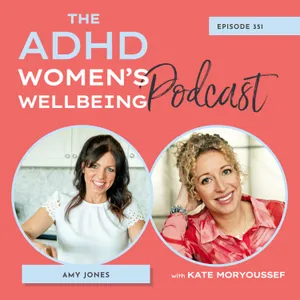
The ADHD Food Permission Slip: Stop Trying to Feed Everyone Perfectly and Why Good Enough Really is OK!
Feeding yourself and your family shouldn’t feel like another daily test you’re somehow failing. Especially when you already know what you “should” be eating — but your ADHD brain, energy and capacity aren’t always able to make it happen. This episode is your permission slip to release the nutritional perfectionism and let “good enough” genuinely be good enough. You're understanding your ADHD. But what happens when you’re ready to actually live differently? Join me live in Manchester this December for The Next Chapter — an immersive event for women ready to move beyond understanding their ADHD and explore what comes next with more confidence, self-compassion and permission to be themselves. All surrounded by like-minded neurodivergent women who truly get it. Ready for your next chapter? Find out more: Book your place here⁠. ________________________________________ You know you probably need more protein. You know eating regularly helps. You might even have plenty of food in the house. But then it’s 6pm, everyone needs feeding, you’re exhausted, you’ve made approximately a thousand decisions already that day and suddenly dinner feels like an emergency. In today’s episode of The ADHD Women’s Wellbeing Podcast, I sit down with Amy Jones, Certified Functional Nutrition Practitioner, Certified ADHD Life Coach, Ontario Certified Teacher and MSc Applied Neuroscience candidate. And this conversation is really about everything that happens in the gap between knowing what might help us and actually being able to do it. Because for ADHD women, food isn’t simply about nutrition. There’s executive function. Decision fatigue. Sensory needs. Hormones. Parenting. Working memory. Energy. Our nervous systems. And the fact that our capacity can look completely different from one day to the next. Amy was diagnosed with ADHD at 45 after her youngest son’s diagnosis prompted her to look more closely at her own experiences. She now brings together nutrition, ADHD coaching, neuroscience and lived experience to help neurodivergent adults make food and self-care feel more manageable. We talk about why traditional meal planning can ask far too much of an already depleted brain, why Amy believes we should plan for our lowest-capacity days rather than our ideal ones, and some wonderfully simple ways to reduce the number of decisions food requires from us. There’s also a lot of permission in this conversation. Permission to assemble dinner instead of cooking it. To use convenience food. To order the takeaway. To make the fridge work for your ADHD brain. And to stop believing that nourishing yourself or your family has to look perfect to count. In this episode, we cover: Amy’s late ADHD diagnosis and how her son’s diagnosis changed her understanding of herself Why knowing what to eat and actually being able to do it are two very different things The executive-function load hidden inside meal planning, shopping and making dinner Why ADHD women can know exactly what would support them and still struggle to follow through Reducing decision fatigue and building food around the life you actually have Planning for low-capacity days rather than relying on your most motivated self Using visibility and your fridge as a practical working-memory support Consistent eating, hunger cues and making food easier to access Parenting neurodivergent children, food, sensory needs and after-school overwhelm Letting go of perfection, “shoulds” and shame around convenience food and takeaway Timestamps: 00:00 - Welcome and introducing Amy Jones 02:15 - Amy’s late ADHD diagnosis and her family’s experience of neurodivergence 04:30 - How nutrition became part of Amy’s ADHD work 05:20 - “I know what I should do, but I can’t do it” 07:00 - The gap between knowledge and behaviour 08:20 - Why meal planning is an executive-function problem 09:00 - Mapping food around your actual life 10:00 - The hidden steps involved in making dinner 11:00 - Motherhood, neurodivergent children and the mental load around food 12:50 - Why there isn’t one food system that works for every ADHD brain 13:20 - Planning for your lowest-capacity day 14:00 - Using your fridge as a working-memory support 15:00 - Making food visible and reducing preparation 16:00 - Dinner assembly rather than cooking a full meal 17:00 - Food, regulation and the after-school crash 18:45 - Amy’s WTF’s for Dinner approach 20:00 - Hunger cues, mini meals and consistent fuel 22:10 - Capacity, visibility and remembering what’s actually in the fridge 23:00 - Perimenopause and changing capacity around cooking 24:00 - Perfectionism in the kitchen 26:00 - Parenting, control and knowing when to step away 27:30 - Learning alongside our neurodivergent children 28:30 - What to keep available for low-capacity days 29:20 - Sharing the shopping and reducing cognitive load 30:00 - What dinner can look like when you have very little left 32:00 - Why “good enough” food really is good enough 33:30 - Using AI and external tools to reduce decision-making 35:00 - Why takeaway can be part of the plan 36:30 - Letting go of food shame 37:00 - Keeping food simple and flexible 38:00 - ADHD, hormones and not knowing what capacity you’ll have tomorrow 39:00 - Cooking because you enjoy it rather than because you “should” 40:00 - A permission slip to stop trying to feed everyone perfectly 41:00 - How to work with Amy and her WTF’s for Dinner system Links and Resources: Join me in Manchester for The Next Chapter Find my ADHD Women’s Wellbeing workshops and resources ⁠here⁠ Get my book, The ADHD Women’s Wellbeing Toolkit, ⁠here⁠ Follow the podcast on Instagram: ⁠@adhd_womenswellbeing_pod⁠ Visit Amy’s website: amyjonesnutrition.com Follow Amy on Instagram: @amyjonesnutrition Find Amy on YouTube: @amyjonesnutrition Download Amy’s free resource for ADHDWW listeners, What To Do When Food Feels Like Too Much: get it here Kate Moryoussef is a women's ADHD lifestyle and wellbeing author, coach and EFT practitioner who helps overwhelmed and unfulfilled newly diagnosed women with ADHD find more calm, balance, hope, health, compassion, creativity and clarity. Learn more about your ad choices. Visit megaphone.fm/adchoices

55 MIN
NOV 2, 2026
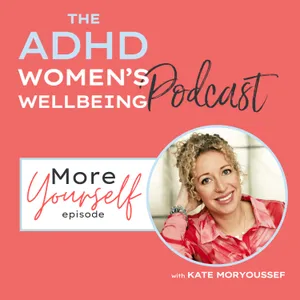
After an ADHD Diagnosis: How to Build a Life That Feels More Like You
Join me live in Manchester this December for The Next Chapter — an immersive event for women ready to move beyond understanding their ADHD and explore what comes next with more confidence, self-compassion and permission to be themselves. Ready for your next chapter? Find out more: Book your place here⁠. ________________________________________ You understand your ADHD. So… what now? There can be such enormous relief in finally understanding your brain. The patterns make more sense. The struggles have context. You might start looking at your past, your relationships and even your family through a completely different lens. But at some point, another question starts to appear: What do I actually do with all of this understanding? In today’s More Yourself episode of The ADHD Women’s Wellbeing Podcast, I’m sharing something I’ve been developing inside my workshops and that sits right at the heart of my upcoming The Next Chapter live experience. It’s called the SAFER framework, and it’s designed to help you look at your life differently now that you understand yourself better. This will provide you with a way of getting curious about what supports you, what drains you, what you’re forcing, what you might be ready to let go of and what you want more of moving forwards. This episode is really about intentionality. Helping you notice the environments where you feel calmer. The people you feel most yourself around. The commitments that leave you depleted. The places where you might need more freedom, more space or more support. Because understanding your ADHD is one thing but using that understanding to make choices that genuinely work for you is something else entirely. And that’s where my upcoming event, The Next Chapter Begins, comes in. In this episode, we cover: Moving beyond ADHD awareness and asking what comes next Why understanding your ADHD can change how you see your past, relationships and family Introducing Kate’s SAFER framework How to notice what supports you and what leaves you feeling depleted Why your physical and emotional environment matters Giving yourself permission to stop living according to who you think you should be Reducing commitments and stepping away from always being the fixer Asking for help and allowing other people to support you Creating more room for what genuinely matters Understanding your energy and recognising when you’re pushing too far The importance of rest, white space and nervous system recovery Building a life that feels more like your own Life Threads podcast: To Listen to the Life Threads podcast on Apple click the link HERE and to listen on Spotify click the link HERE Timestamps: 00:00 - Why understanding your ADHD is only the beginning 00:50 - The question: what comes next? 01:15 - Introducing the SAFER framework 02:10 - A different way of looking at your life 02:35 - The Next Chapter live ADHD Women’s Wellbeing event 04:00 - Moving from understanding into intentional living 05:20 - Exploring what helps you feel calmer and more supported 08:10 - Simplifying and reducing unnecessary choices 08:30 - Living more on your own terms 09:00 - What helps you feel most like yourself? 09:35 - Stepping away from decades of masking and “shoulds” 10:00 - Reducing commitments and letting go of the fixer role 10:25 - Learning to ask for help 11:00 - Creating more room for what matters 13:20 - Understanding your energy and capacity 14:15 - Protecting your energy and reducing the extremes 15:00 - Cortisol, adrenaline and knowing when you need to come back down 16:35 - One way to protect your energy this week 17:00 - Rest, recovery and recalibration 17:10 - Why ADHD brains need time to decompress 18:00 - Glimmers, nervous system regulation and meaningful connection 19:00 - More Yourself and continuing to understand yourself through a neurodivergent lens Links and Resources: Find my ADHD Women’s Wellbeing workshops and resources here. Get my book, The ADHD Women’s Wellbeing Toolkit, here. Find out more about The Next Chapter event and book your place here. Follow the podcast on Instagram: @adhd_womenswellbeing_pod. Kate Moryoussef is an ADHD women's wellbeing author, coach and EFT practitioner who helps overwhelmed and unfulfilled newly diagnosed women with ADHD find more calm, balance, hope, health, compassion, creativity and clarity. Learn more about your ad choices. Visit megaphone.fm/adchoices
23 MIN
OCT 29, 2026
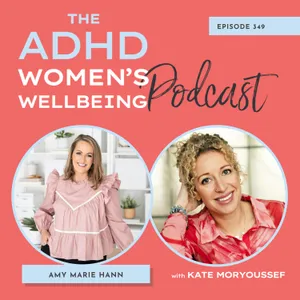
The ADHD Sweet Spot: How to Find Work and a Life You Don’t Need to Recover From
You understand your ADHD. But what happens when you’re ready to live differently? Join me live in Manchester this December for The Next Chapter — an immersive event for women ready to move beyond understanding their ADHD and explore what comes next with more confidence, self-compassion and permission to be themselves. All surrounded by neurodivergent women who truly get it.Ready for your next chapter? Find out more and book your place. ______________________________________ In today’s episode of The ADHD Women’s Wellbeing Podcast, I sit down with Amy Marie Hann, author of Master the Mundane: How to Manage Your Life, Home and Family as a Mom with ADHD. And this conversation is for anyone who can do really big, complicated, creative things… but still feels completely floored by the dishwasher, laundry, meals, forms, life admin and all the tiny repetitive jobs that somehow never stop coming. Amy was diagnosed with ADHD at just five years old, and ADHD runs through her whole family. But even with that early diagnosis, medication and years of understanding her brain, adulthood still brought a whole new layer of challenges. The mental load. The overwhelm. The pressure to keep everything running. The feeling that everyone else seems to be managing it better. Then perimenopause hit, and everything got harder. We talk about why so many ADHD women swing between over-functioning and burnout, why complicated productivity systems rarely stick, and why the answer might not be becoming more organised or disciplined at all. Amy shares how she learned to simplify, work with her actual capacity and focus on the small number of boring-but-important things that keep life moving. This is a very practical conversation, but it’s also such a compassionate one. Because if you’ve ever looked around your house, your to-do list or your family life and thought, Why can’t I just keep on top of this? — there is absolutely nothing wrong with you. You may just be trying to carry far too much. In this episode, we cover: Being diagnosed with ADHD at five, and what Amy understood — and didn’t understand — about ADHD growing up Why medication helped with school and focus but didn’t teach the life skills needed for adulthood How perimenopause can intensify ADHD symptoms, even when you already understand your diagnosis ADHD medication alongside sleep, exercise, lifestyle support and practical strategies Losing confidence in your abilities and choosing an “easier” path because of ADHD Finding the ADHD “sweet spot” between intense challenge, boredom and burnout Why ADHD brains may need meaningful challenge without an unsustainable pace Building work and a life around your energy instead of expecting eight-hour-a-day productivity Why ADHD mothers carry such a heavy mental load Unrealistic expectations, perfectionism and the feeling of never doing enough Why everything can feel urgent when prioritisation is difficult The cycle of long to-do lists, overdoing it and burnout Applying compassionate parenting strategies to yourself Amy’s “taxing tasks” approach and identifying the boring things that genuinely matter Why new planners and complicated systems often work temporarily because novelty is doing the heavy lifting Reducing daily executive-function demands by making basic routines repeatable Defining “good enough” instead of aiming for a perfectly organised home Why understanding your capacity matters more than copying someone else’s routine Simplifying when outsourcing isn’t financially realistic ADHD, motherhood and the shame attached to domestic expectations Sharing the load with partners and finding the household tasks that suit each person The power of ADHD women finding spaces where they can ask honest questions without shame Life Threads podcast: To Listen to the Life Threads podcast on Apple click the link HERE and to listen on Spotify click the link HERE Timestamps: 00:00 - Welcome and introducing Amy Marie Hann 02:00 - Being diagnosed with ADHD at five 03:00 - What an early diagnosis did — and didn’t — explain 04:00 - ADHD, adulthood and perimenopause 05:00 - Medication, school and self-belief 08:00 - Medication, lifestyle and practical strategies 09:30 - Finding the right pace for an ADHD brain 10:30 - The cycle of challenging work, boredom and burnout 11:30 - Finding your ADHD sweet spot 13:00 - Trying different paths and discovering what fits 15:00 - Building work around your actual energy 16:00 - Why your best work may not require eight-hour days 17:00 - Finding something you can stay interested in 18:00 - ADHD, organisation and the myth that every ADHD woman looks the same 20:00 - Perfectionism, over-functioning and coping behaviours 21:00 - The mental load of ADHD motherhood 22:00 - Unrealistic expectations and the endless to-do list 23:00 - Parenting yourself with more compassion 24:00 - The six or seven boring things that matter 25:00 - Why complicated systems fail 26:00 - Executive-function energy and removing daily decisions 27:00 - Amy’s three daily “taxing tasks” 28:00 - Working full-time, parenting and the pressure to do everything 29:00 - Self-care, capacity and realistic expectations 30:00 - Letting things go and simplifying 31:00 - Replacing shame with “good enough” 32:00 - Domestic expectations and ADHD women 33:00 - Sharing household responsibilities 34:00 - Knowing your capacity before dividing the load 36:00 - Master the Mundane and Amy’s practical framework 37:00 - Coaching, body doubling and accountability 39:00 - Why ADHD community can reduce shame 41:00 - Where to find Amy and her work Links and Resources: Find my popular ADHD Women’s Wellbeing workshops and resources on my website here. Follow the podcast on Instagram: @adhd_womenswellbeing_pod Get my book, The ADHD Women’s Wellbeing Toolkit (also available in ebook and audiobook) here Join the More Yourself membership community here Visit Amy’s website: amymariehann.com Follow Amy on Instagram: @amymariehann Get Amy’s free resource, Thriving in Motherhood, here Find Amy’s book, Master the Mundane: How to Manage Your Life, Home and Family as a Mom with ADHD. Kate Moryoussef is a women's ADHD lifestyle and wellbeing author, coach and EFT practitioner who helps overwhelmed and unfulfilled newly diagnosed women with ADHD find more calm, balance, hope, health, compassion, creativity and clarity. Learn more about your ad choices. Visit megaphone.fm/adchoices
48 MIN
OCT 21, 2026
40 Years of ADHD: What Pioneer Dr Kathleen Nadeau Has Learned About ADHD Women, Late Diagnosis & Thriving
You're understanding your ADHD. But what happens when you’re ready to actually live differently? Join me live in Manchester this December for The Next Chapter — an immersive event for women ready to move beyond understanding their ADHD and explore what comes next with more confidence, self-compassion and permission to be themselves. All surrounded by like-minded neurodivergent women who truly get it. Ready for your next chapter? Find out more: Book your place here⁠. ________________________________________ For decades, ADHD research focused overwhelmingly on hyperactive boys while girls and women with ADHD were missed, misdiagnosed or told they were anxious or depressed. ADHD expert, Dr Kathleen Nadeau has spent more than 40 years helping to change our understanding of ADHD in women. On this week’s episode of The ADHD Women’s Wellbeing Podcast, I’m joined by internationally recognised clinical psychologist, author and ADHD pioneer Kathleen G. Nadeau, PhD. Kathleen has written or co-authored 18 books on ADHD and was awarded the CHADD Lifetime Achievement Award in 2025. Her ground breaking work has helped bring ADHD in girls, women and older adults into a conversation that once centred almost entirely on hyperactive young boys. And having ADHD herself, alongside decades of clinical experience and generations of ADHD within her own family, Kathleen brings a perspective that goes far beyond diagnostic criteria. We talk about what ADHD looked like when Kathleen entered the field in the 1970s, why so many intelligent girls and women were missed and what happens when a woman spends her life believing she simply needs to try harder. We also get into hormones, perimenopause and postpartum mental health, the physical conditions increasingly being seen alongside ADHD and why our healthcare systems still struggle when women’s physical and mental health needs intersect. But this isn’t only a conversation about what has gone wrong. Kathleen talks beautifully about finding the environment in which your ADHD brain can thrive, the healing that can come with a later-life diagnosis and why women need connection with other women who finally understand. You do not have to spend the rest of your life trying to make yourself fit the wrong environment. Sometimes, you need to plant yourself in a different garden. ________________________________________ In this episode, we cover: How our understanding of ADHD has changed since Kathleen began working in the field in the late 1970s Why ADHD was once seen almost entirely as a condition affecting hyperactive young boys The moment Kathleen began recognising ADHD in parents, adults and within her own family Why bright, high-achieving children can have ADHD even when they're doing exceptionally well academically Looking beyond traditional ADHD diagnostic criteria to understand the wider experience How girls and women with ADHD were overlooked and the work that began changing that Rejection sensitivity, feeling different and the impact of growing up without an explanation for your ADHD Why ADHD can be both challenging and a source of curiosity, connection and different ways of thinking Whether our schools and workplaces are asking ADHD brains to function in environments that don't suit them ADHD hormones, puberty, pregnancy, postpartum, perimenopause and why the research is still catching up Why women's ADHD symptoms have so often been misdiagnosed as anxiety or depression What happens when psychiatry, women's health and other areas of medicine operate in separate silos The physical conditions and health difficulties increasingly being seen alongside ADHD Why connection with other ADHD women can be such an important part of healing Receiving an ADHD diagnosis in your 60s, 70s or later, and navigating grief for the life you might have lived Why a late diagnosis can offer more healing than regret Kathleen's “right garden” approach and finding the environments, relationships and work where you can thrive High-achieving ADHD women who hold everything together at work before collapsing behind closed doors The invisible expectations still placed on women to manage families, homes, relationships and emotional labour Why ADHD treatment needs to go beyond medication, coaching or therapy in isolation Learning to care for yourself, follow your heart and stop measuring yourself by how well you meet everyone else's needs Timestamps: 00:00 - Welcome and introducing Dr Kathleen Nadeau 02:25 - Kathleen's personal ADHD “learning lab” 04:00 - Working with ADHD since the late 1970s 06:00 - How ADHD diagnosis and treatment looked in the early days 07:00 - Realising adults didn't simply grow out of ADHD 09:30 - Writing some of the earliest books about ADHD 11:20 - Who was being missed? 12:00 - Gifted children, hidden ADHD and looking beyond school performance 13:00 - Looking beyond the diagnostic criteria 15:00 - What the early ADHD criteria left out 16:00 - Rejection sensitivity and why girls changed the conversation 17:00 - Kathleen's pioneering work on ADHD in women and girls 18:00 - What decades of following ADHD families can teach us 20:00 - ADHD as a type of brain, not simply a disorder 21:00 - Curiosity, connection and the strengths within an ADHD brain 23:00 - Do our education systems actually suit ADHD brains? 25:00 - Different ways of learning 26:00 - ADHD, hormones and the stages of a woman's life 27:00 - Why women were excluded from so much medical research 30:00 - The resistance to recognising hormones as part of the ADHD conversation 32:00 - Postpartum mental health and the research still desperately needed 35:00 - Why women's healthcare needs a more integrated approach 37:00 - ADHD and associated physical health conditions 39:00 - Why ADHD women connect so powerfully with each other 40:00 - Groups, validation and finally feeling like you fit in 42:00 - Late diagnosis, grief and understanding a lifetime through a new lens 44:00 - Planting yourself in the right garden 46:00 - Kathleen's next chapter and the Institute for Lifespan ADHD Training 47:00 - Why ADHD treatment needs a more integrated approach 49:00 - Giving yourself permission to do life differently 50:00 - High-achieving ADHD women and what happens behind closed doors 52:00 - The expectations still placed on women to hold everything together 53:30 - The ILAT Global Summit and training professionals to better support ADHD 56:30 - Kathleen's advice for women diagnosed later in life Articles Mentioned: www.additudemag.com/lindsay-clancy-postpartum-adhd/ Links and Resources: Find my popular ADHD Women's Wellbeing workshops and resources on my website here. Follow the podcast on Instagram: @adhd_womenswellbeing_pod Get my book, The ADHD Women's Wellbeing Toolkit (also available in ebook and audiobook) here Join the More Yourself membership community here Learn more about Kathleen and the Institute for Lifespan ADHD Training at ilat.org Visit Kathleen's website at drkathleennadeau.com Connect with Kathleen on LinkedIn Find out more and register for the ILAT Global Summit (online) at ilatglobal.org ⭐ADHD Women's Wellbeing listeners can use the code ILAT50 at checkout to save $50 on online summit registration. Kate Moryoussef is a women's ADHD lifestyle and wellbeing author, coach and EFT practitioner who helps overwhelmed and unfulfilled newly diagnosed women with ADHD find more calm, balance, hope, health, compassion, creativity and clarity. Learn more about your ad choices. Visit megaphone.fm/adchoices
64 MIN