


ADHD Women's Wellbeing Podcast
Kate Moryoussef
40 Years of ADHD: What Pioneer Dr Kathleen Nadeau Has Learned About ADHD Women, Late Diagnosis & Thriving
OCT 21, 202663 MIN
Description
You're understanding your ADHD. But what happens when you’re ready to actually live differently?
Join me live in Manchester this December for The Next Chapter — an immersive event for women ready to move beyond understanding their ADHD and explore what comes next with more confidence, self-compassion and permission to be themselves.
All surrounded by like-minded neurodivergent women who truly get it. Ready for your next chapter? Find out more: Book your place here.
________________________________________
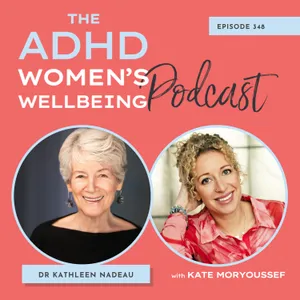
For decades, ADHD research focused overwhelmingly on hyperactive boys while girls and women with ADHD were missed, misdiagnosed or told they were anxious or depressed. ADHD expert, Dr Kathleen Nadeau has spent more than 40 years helping to change our understanding of ADHD in women.
On this week’s episode of The ADHD Women’s Wellbeing Podcast, I’m joined by internationally recognised clinical psychologist, author and ADHD pioneer Kathleen G. Nadeau, PhD.
Kathleen has written or co-authored 18 books on ADHD and was awarded the CHADD Lifetime Achievement Award in 2025. Her ground breaking work has helped bring ADHD in girls, women and older adults into a conversation that once centred almost entirely on hyperactive young boys.
And having ADHD herself, alongside decades of clinical experience and generations of ADHD within her own family, Kathleen brings a perspective that goes far beyond diagnostic criteria.
We talk about what ADHD looked like when Kathleen entered the field in the 1970s, why so many intelligent girls and women were missed and what happens when a woman spends her life believing she simply needs to try harder.
We also get into hormones, perimenopause and postpartum mental health, the physical conditions increasingly being seen alongside ADHD and why our healthcare systems still struggle when women’s physical and mental health needs intersect.
But this isn’t only a conversation about what has gone wrong.
Kathleen talks beautifully about finding the environment in which your ADHD brain can thrive, the healing that can come with a later-life diagnosis and why women need connection with other women who finally understand.
You do not have to spend the rest of your life trying to make yourself fit the wrong environment.
Sometimes, you need to plant yourself in a different garden.
________________________________________
In this episode, we cover:
How our understanding of ADHD has changed since Kathleen began working in the field in the late 1970s
Why ADHD was once seen almost entirely as a condition affecting hyperactive young boys
The moment Kathleen began recognising ADHD in parents, adults and within her own family
Why bright, high-achieving children can have ADHD even when they're doing exceptionally well academically
Looking beyond traditional ADHD diagnostic criteria to understand the wider experience
How girls and women with ADHD were overlooked and the work that began changing that
Rejection sensitivity, feeling different and the impact of growing up without an explanation for your ADHD
Why ADHD can be both challenging and a source of curiosity, connection and different ways of thinking
Whether our schools and workplaces are asking ADHD brains to function in environments that don't suit them
ADHD hormones, puberty, pregnancy, postpartum, perimenopause and why the research is still catching up
Why women's ADHD symptoms have so often been misdiagnosed as anxiety or depression
What happens when psychiatry, women's health and other areas of medicine operate in separate silos
The physical conditions and health difficulties increasingly being seen alongside ADHD
Why connection with other ADHD women can be such an important part of healing
Receiving an ADHD diagnosis in your 60s, 70s or later, and navigating grief for the life you might have lived
Why a late diagnosis can offer more healing than regret
Kathleen's “right garden” approach and finding the environments, relationships and work where you can thrive
High-achieving ADHD women who hold everything together at work before collapsing behind closed doors
The invisible expectations still placed on women to manage families, homes, relationships and emotional labour
Why ADHD treatment needs to go beyond medication, coaching or therapy in isolation
Learning to care for yourself, follow your heart and stop measuring yourself by how well you meet everyone else's needs
Timestamps:
00:00 - Welcome and introducing Dr Kathleen Nadeau
02:25 - Kathleen's personal ADHD “learning lab”
04:00 - Working with ADHD since the late 1970s
06:00 - How ADHD diagnosis and treatment looked in the early days
07:00 - Realising adults didn't simply grow out of ADHD
09:30 - Writing some of the earliest books about ADHD
11:20 - Who was being missed?
12:00 - Gifted children, hidden ADHD and looking beyond school performance
13:00 - Looking beyond the diagnostic criteria
15:00 - What the early ADHD criteria left out
16:00 - Rejection sensitivity and why girls changed the conversation
17:00 - Kathleen's pioneering work on ADHD in women and girls
18:00 - What decades of following ADHD families can teach us
20:00 - ADHD as a type of brain, not simply a disorder
21:00 - Curiosity, connection and the strengths within an ADHD brain
23:00 - Do our education systems actually suit ADHD brains?
25:00 - Different ways of learning
26:00 - ADHD, hormones and the stages of a woman's life
27:00 - Why women were excluded from so much medical research
30:00 - The resistance to recognising hormones as part of the ADHD conversation
32:00 - Postpartum mental health and the research still desperately needed
35:00 - Why women's healthcare needs a more integrated approach
37:00 - ADHD and associated physical health conditions
39:00 - Why ADHD women connect so powerfully with each other
40:00 - Groups, validation and finally feeling like you fit in
42:00 - Late diagnosis, grief and understanding a lifetime through a new lens
44:00 - Planting yourself in the right garden
46:00 - Kathleen's next chapter and the Institute for Lifespan ADHD Training
47:00 - Why ADHD treatment needs a more integrated approach
49:00 - Giving yourself permission to do life differently
50:00 - High-achieving ADHD women and what happens behind closed doors
52:00 - The expectations still placed on women to hold everything together
53:30 - The ILAT Global Summit and training professionals to better support ADHD
56:30 - Kathleen's advice for women diagnosed later in life
Articles Mentioned:
www.additudemag.com/lindsay-clancy-postpartum-adhd/
Links and Resources:
Find my popular ADHD Women's Wellbeing workshops and resources on my website here.
Follow the podcast on Instagram: @adhd_womenswellbeing_pod
Get my book, The ADHD Women's Wellbeing Toolkit (also available in ebook and audiobook) here
Join the More Yourself membership community here
Learn more about Kathleen and the Institute for Lifespan ADHD Training at ilat.org
Visit Kathleen's website at drkathleennadeau.com
Connect with Kathleen on LinkedIn
Find out more and register for the ILAT Global Summit (online) at ilatglobal.org
⭐ADHD Women's Wellbeing listeners can use the code ILAT50 at checkout to save $50 on online summit registration.
Kate Moryoussef is a women's ADHD lifestyle and wellbeing author, coach and EFT practitioner who helps overwhelmed and unfulfilled newly diagnosed women with ADHD find more calm, balance, hope, health, compassion, creativity and clarity.
Learn more about your ad choices. Visit megaphone.fm/adchoices