



Roots To Foods Podcast
RootsToFoods
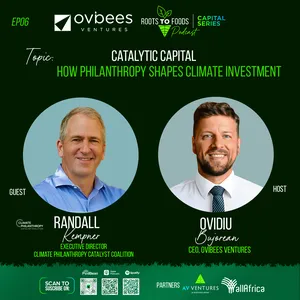
Catalytic Capital: How Philanthropy Shapes Climate Investment
SEP 8, 202639 MIN
Description
EP06 - Catalytic Capital: How Philanthropy Shapes Climate Investment
Randall Kempner, Executive Director, Climate Philanthropy Catalyst Coalition
Wave 2 of the RootsToFoods Capital Series opens with the question that has run under every conversation so far: what is the specific form of capital that moves when nothing else will?
Our guest built the Aspen Network of Development Entrepreneurs (ANDE) from the ground up, a field-building institution whose purpose was never a financial return but the ecosystem conditions that let profit-making businesses in emerging markets grow. He now leads the Climate Philanthropy Catalyst Coalition and has spent more time than almost anyone alive studying what philanthropy can do that nothing else can.
In this conversation, Randall Kempner and host Ovidiu Bujorean cover:
Why climate philanthropy has never exceeded 2% of total global giving, and why that's an intent problem more than a mechanisms problem.
Why a foundation's real leverage isn't the 5% it grants each year. It's the other 95% sitting in its investment portfolio.
Philanthropic collaboratives are where the highest-leverage work is happening right now. Groups like Forest & People Climate, Global Methane Hub, and ORCA (ocean resilience) pool resources around specific high-impact solutions.
"Philanthropy should be the first in - period. Its job is to take the risk to move money." - Randall Kempner
For the practitioner-level breakdown of this conversation, three takeaways, and the data behind it, subscribe to Capital Deployment, our LinkedIn newsletter for practitioners closing the gap between capital intent and deployment: https://www.linkedin.com/newsletters/capital-deployment-7454225038356013056