



Tasmanian Tiger shot at Cape Otway lighthouse (1973)? | Mainland Thylacine search 2026
OCT 25, 202624 MIN
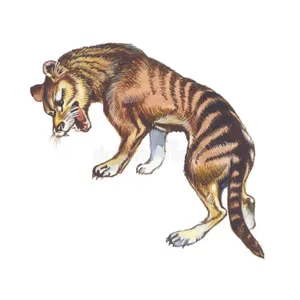
Description
Does the worlds most elusive marsupial have a bizarre habit of getting caught in chicken coops ? In this episode we dive into two astonishing Thylacine encounters spanning forty years and both sides of the Bass Strait. First, we unpack the historic and tragic 1930 Mawbanna shooting in a chicken pen in Tasmania, widely recognized as the last known wild Tasmanian Tiger ever killed in Tasmania. Then, we cross over to mainland Australia to investigate a gripping 1973 case brought to light by David Chinn, an ex assistant light house keeper detailing an alleged shooting of a Tasmanian Tiger also inside a chicken pen by the Cape Otway lighthouse keeper.The 1930 Mawbanna Thylacine: Special Collection: ThylacinesGareth Linnard Corresponding Author, Stephen R. Sleightholme Corresponding AuthorAustralian Zoologist (2024) 44 (1): 131–172.ABSTRACTThe last confirmed wild Thylacine kill, that of an adult male, was made by Wilfred Batty on a property leased by his father in the Parish of Anderson, within the Mawbanna district on the north-west coast of Tasmania, at midday on the 13th of May 1930. In terms of the historical traceability of the species in the wild, the shooting of the Mawbanna Thylacine, the first of only four evidentially supported specimens recovered during the 1930s.
Otway Lighthouse Tasmanian Tiger 1973"I managed to contact Mr Chinn today and we spoke on the phone for about ten minutes...A key difference he pointed out to what the article says is that he does not know if the body was buried.The account he gave was that he had arrived in Australia 2 and a half years prior, and had spent that time working at the Cape Otway Lightstation as a grounds keeper, through until 1974. His main duty was cutting crass and occasionally doing odd jobs such as painting.Mr Chinn his boss Mr Ernie Jones, who was fond of his home brew beer, was the one to discover the Tasmanian tiger. They kept a pet rabbit and chickens at the lightstation. One morning they discovered the rabbit dead in the garden and Ernie found the thylacine inside the chook pen. He said the thylacine probably got in by climbing under the wire mesh but when Mr Jones arrived it tried frantically to escape. Nevertheless Mr Jones took his gun and shot the animal.Mr Jones then brought the dead animal into the workplace to show Mr Chinn. Mr Chinn said he didn't know what the animal was but when he saw the photograph accompanying the first newspaper article this month he recognised it. He said he was certain it had dark stripes from mid body to its rump - just as reported in the second article.According to Mr Chinn, Mr Jones said he would dispose of the body and Mr Chinn is not sure how the animal was disposed of - he reasoned it might have been buried, or just as easily thrown into the sea. He says that in 1974 he contacted the relevant government department to report the case but he felt like they considered him a nutcase, so he decided to leave his report at that.When I asked Mr Chinn if he had ever seen a photograph of a spotted-tailed quoll he said he didn't know that animal. I then asked about the size of the animal he saw and he said it was the size of a large greyhound dog ruling out, in my opinion, a spotted-tailed quoll.He mentioned the animal was "pretty healthy" and I asked whether it might have been a dog with poor fur condition that made it appear as if it was striped. He repeated again that the animal was "pretty healthy", that it "wasn't skin and bones" and said its fur condition was good.I asked what colour it was and he said "tan beige" and that the stripes were "dark". I let him know that thylacines have been variously reported as choclatey-brown through grey like an Eastern grey kangaroo through to tan and beige and I asked whether he noticed if it was male or female. He replied that he didn't take note and when I mentioned thylacines having a pouch he said that he didn't know that.Finally, Mr Chinn reported that Mr Jones is now deceased."