


The Academic Minute
Academic Minute
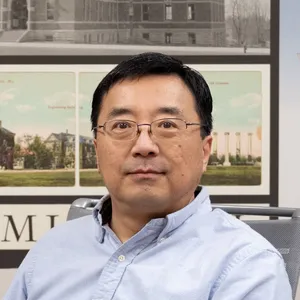
Andrew Gu, University of Missouri - Turning DNA into Rewritable Digital Memory
OCT 21, 20262 MIN
Description
Our DNA may hold the key to storing our digital data.
Andrew Gu, professor of chemical and biomedical engineering at the University of Missouri, determines how.
Faculty Bio:
Andrew Gu leads a research lab at the University of Missouri’s College of Engineering that brings together biology, engineering and nanotechnology. His long‑term goal is to understand how life works at the molecular level and to create new tools that help doctors diagnose and treat diseases in a more personalized way.
Transcript:
When we look at the digital world, one thing is clear: we’re running out of room to store everything we create. For years, I’ve been fascinated by an idea that sounds like science fiction but comes straight from biology. What if we stored our data in DNA — the same molecule that carries the instructions for life?DNA is remarkable. It’s tiny, stable and incredibly dense. In theory, you could pack all the world’s information into something the size of a shoebox. And unlike today’s massive data centers, DNA doesn’t need much energy to keep it safe.But there’s been one big problem. Once you write information into synthetic DNA, it stays there. No changes. No updates. For a modern storage system, that’s a deal breaker.My team and I wanted to fix that. We asked a simple question:Can DNA behave more like the hard drives we use every day — something you can erase and rewrite?And now, we’ve taken a major step toward that future. We developed a method that lets us remove data from DNA and write new data back in. Over and over again.That’s something researchers haven’t been able to do before. And it opens the door to real, everyday DNA based storage — not just long-term archiving.Of course, writing the data is only half the job. You also need a way to read it. So, we’re building a small electronic device that uses a nanoscale sensor.As the DNA passes through it, we capture tiny electrical signals and translate them into digital files. Someday, I hope this whole system will shrink down to the size of a USB drive.To me, DNA storage isn’t just a scientific challenge. It’s a way to build a cleaner, more efficient future for our information hungry world.
Read More:
[Show Me Mizzou] - Mizzou researchers are developing a rewritable DNA hard drive
This is a public episode. If you would like to discuss this with other subscribers or get access to bonus episodes, visit www.academicminute.org