The Academic Minute

Academic Minute

Details

Astronomy to Zoology www.academicminute.org

Recent Episodes

OCT 23, 2026
Jenny Whilde, University of Florida - How One Bottle of Water Can Reveal the Secrets of an Entire Ecosystem
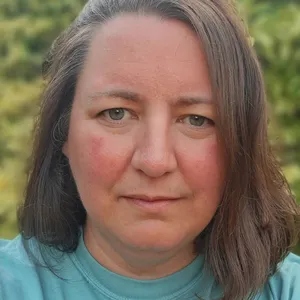
One bottle of water can reveal the secrets of an entire ecosystem. Jenny Whilde, adjunct research scientist at the University of Florida, explains how. Faculty Bio: Dr. Jenny Whilde holds a PhD in Animal Behavior, focusing on social group dynamics in zoo-housed animals, including elephants and orangutans. She has many years of experience in scientific writing, editing, and proofreading across a broad range of disciplines including cancer research, marine biology, and behavioral ecology and has contributed significantly to scientific publications, successful grant applications, and mainstream media articles. Transcript: Ireland is a land of storytellers, and it’s not just the people. The rivers, too, have stories to tell. In fact, a single water sample can be used to identify every living thing that has been in the area, including wildlife, humans, and even the pathogens that impact them.The key that unlocks this information is environmental DNA, or eDNA for short. This is DNA that any living organism has shed into its surroundings. It can come from skin cells, pollen, waste matter, even a cough or a sneeze. eDNA that is filtered from a water sample provides a snapshot of exactly what is living in and around the water. Typically, researchers use an approach called metabarcoding to decode eDNA. This is a powerful method if you are looking for a particular set of species, but it finds only what it is designed to find and ignores everything else.Our research team used a different technique, called long-read shotgun metagenomic DNA sequencing. This technique sequences all of the collected DNA from every species, from viruses to vertebrates and everything in between. Our team, led by Professor David Duffy, took water samples from different locations along the Avoca River, in Co. Wicklow, starting near its mountain source right through to where the river runs into the sea.The DNA we filtered from the water samples came from: the obvious, like ducks, sheep, and humans; the more elusive, like leatherback turtles and octopi at the river mouth, and from microscopic invertebrates and even viruses.We could identify the genetic origins of some species, and also found evidence of wastewater pollution. Within 24 hours, it is now possible to obtain a readout of all the eDNA in a water sample from any location, unlocking the secrets of an entire ecosystem. Read More: [The Conversation] - Fishing for DNA – how a cup of river water can reveal secrets about human health, pollution and biodiversity [Oxford Academic] - Long-read nanopore shotgun metagenomic DNA sequencing for river biodiversity, wildlife, pollution, and environmental health monitoring This is a public episode. If you would like to discuss this with other subscribers or get access to bonus episodes, visit www.academicminute.org

2 MIN
OCT 22, 2026
Walter Mswaka, Rollins College - The Evolving Role of Cooperatives in Ethiopia's Coffee Industry
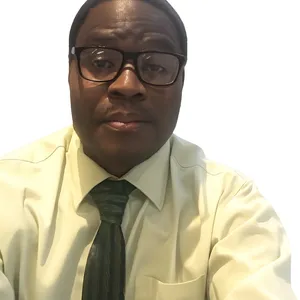
The coffee industry is vital to Ethiopia, but how is it evolving? Walter Mswaka, associate professor of social entrepreneurship at Rollins College, examines the role of cooperatives. Faculty Bio: Walter Mswaka, PhD, is Associate Professor of Social Entrepreneurship at Rollins College in Winter Park, Florida. His areas of specialization include: Social Entrepreneurship; Entrepreneurial Finance; Business Strategy; and Non-Governmental Organizations (NGOs).Professor Mswaka is an academic and social enterprise practitioner with over 20 years of experience working with social enterprises in various socio-economic contexts around the world. This includes providing practical hands-on support and technical advice to individuals and organizations involved in social enterprise in the UK, Brazil, Nepal, Ethiopia and Zambia, contributing to public understanding of social enterprise and community resilience through research and publications in peer reviewed journals. Transcript: Ethiopia is the largest coffee producer in Africa with over 10 million people involved in the production of coffee. Ethiopian coffee is valued globally and is a vital crop to the Ethiopian people, given the large percentage of households that depend on coffee production and sales.The coffee-marketing cooperatives of Ethiopia represent the very essence of the coffee business in that country, contributing to economic development by increasing incomes and employability, improving living conditions and stimulating grassroots economic activities. However, despite their importance, the cooperatives face challenges of resilience and sustainability. My research has shed new light on how they operate and deliver value, and how they are affected by national, internal and external stakeholders and institutional rules. We examined the operations of three small coffee-marketing cooperatives in southwest Ethiopia, with a focus on their internal governance challenges that include structure, communication and interactions with middlemen. We employed a multiple-case study approach involving face-to-face focus-group interviews with the management committees of the cooperatives--separately from the members, so that we could actually see what’s going on.We looked at five themes that influence operations: structures of governance, incorporating board management identity and make-up; selection of management committee members; the role of board and management committee members; the relationship between board/management committee and members; and board understanding of financial sustainability and influence of external stakeholders.Our findings illustrate that Ethiopian cooperatives are embedded in the communities they serve and provide a platform for members to benefit financially. While current literature suggests that the cooperatives have democratic governance models, closer scrutiny reveals that these organizations have complex governance structures. This suggests the need to understand better cooperative operating environments and the various external influences obtruding governance operations.Our findings have had an impact on both increasing coffee production and increasing the number of women involved in the cooperatives. This is a public episode. If you would like to discuss this with other subscribers or get access to bonus episodes, visit www.academicminute.org

2 MIN
OCT 21, 2026
Andrew Gu, University of Missouri - Turning DNA into Rewritable Digital Memory
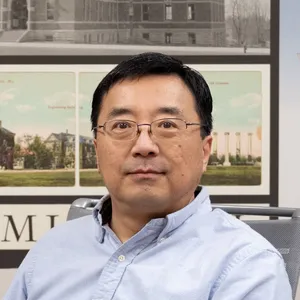
Our DNA may hold the key to storing our digital data. Andrew Gu, professor of chemical and biomedical engineering at the University of Missouri, determines how. Faculty Bio: Andrew Gu leads a research lab at the University of Missouri’s College of Engineering that brings together biology, engineering and nanotechnology. His long‑term goal is to understand how life works at the molecular level and to create new tools that help doctors diagnose and treat diseases in a more personalized way. Transcript: When we look at the digital world, one thing is clear: we’re running out of room to store everything we create. For years, I’ve been fascinated by an idea that sounds like science fiction but comes straight from biology. What if we stored our data in DNA — the same molecule that carries the instructions for life?DNA is remarkable. It’s tiny, stable and incredibly dense. In theory, you could pack all the world’s information into something the size of a shoebox. And unlike today’s massive data centers, DNA doesn’t need much energy to keep it safe.But there’s been one big problem. Once you write information into synthetic DNA, it stays there. No changes. No updates. For a modern storage system, that’s a deal breaker.My team and I wanted to fix that. We asked a simple question:Can DNA behave more like the hard drives we use every day — something you can erase and rewrite?And now, we’ve taken a major step toward that future. We developed a method that lets us remove data from DNA and write new data back in. Over and over again.That’s something researchers haven’t been able to do before. And it opens the door to real, everyday DNA based storage — not just long-term archiving.Of course, writing the data is only half the job. You also need a way to read it. So, we’re building a small electronic device that uses a nanoscale sensor.As the DNA passes through it, we capture tiny electrical signals and translate them into digital files. Someday, I hope this whole system will shrink down to the size of a USB drive.To me, DNA storage isn’t just a scientific challenge. It’s a way to build a cleaner, more efficient future for our information hungry world. Read More: [Show Me Mizzou] - Mizzou researchers are developing a rewritable DNA hard drive This is a public episode. If you would like to discuss this with other subscribers or get access to bonus episodes, visit www.academicminute.org
2 MIN
OCT 20, 2026
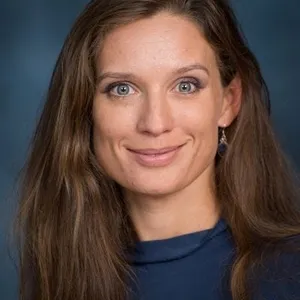
Deepa Das Acevedo, Emory University School of Law - What Is Faculty Tenure and Why Is It So Controversial?
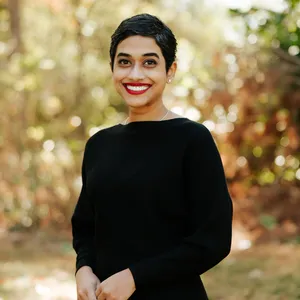
Why is faculty tenure so controversial? Deepa Das Acevedo, associate professor of law at the Emory University School of Law, explores this question. Faculty Bio: Deepa Das Acevedo is a legal anthropologist and Associate Professor at Emory University School of Law. Since 2020, she has been studying faculty tenure as an employment protection, blending legal doctrine with qualitative and quantitative social science. Her 2025 monograph, The War on Tenure, was named one of Forbes’ Top 10 Books in Higher Education, and her commentary has appeared in InsideHigherEd, The Chronicle of Higher Education, and TIME’s Made by History, among others. Transcript: You might have heard of professors having “tenure” and wondered what exactly that is or why anyone cares.Tenure is a type of employment contract that applies to around 20-to-30% of all full-time faculty in the United States. Whereas the average American employee can be fired “at-will” – for good reason, bad reason, or no reason at all – tenured faculty, like all employees who hold “just cause “contracts, can only be fired for cause. In other words, tenure provides a level of job security that’s pretty unusual even if it’s not unique.Partly because of this heightened security, tenure triggers strong concerns about how it might affect faculty behavior. Critics both inside and outside the academy worry that tenure makes faculty lazy, prone to unethical (or even illegal) behavior, and more likely to become ideological renegades. The thinking is: why wouldn’t you do these things if you could get away with them while keeping your job? However, my research suggests that tenure doesn’t have these incentive-distorting effects. I built a national dataset of all individual tenured-faculty-terminations across institution, discipline, and region (within the United States) that happened between 2000 and 2021. It turns out that professors maintain fairly consistent levels of productivity before and after they win tenure, that (at least during the study period) they didn’t often lose their jobs because of their ideological views, and – finally – that there is no reason to think that winning tenure encourages professional or interpersonal misconduct. All this means that tenure isn’t encouraging bad behavior or getting in the way of good behavior as its critics understandably (but wrongly) argue. Read More: [The Chronicle of Higher Education] - Is Any Professor Safe From Being Fired Anymore? [Inside Higher Ed] - Fighting Back Against ‘The War on Tenure’ [Time] - What Academic Tenure Is Really About [Cambridge University Press] - The War on Tenure This is a public episode. If you would like to discuss this with other subscribers or get access to bonus episodes, visit www.academicminute.org
2 MIN
OCT 19, 2026
Julia Khrebtan-Horhager, Colorado State University - AI in Higher Education: A Friend or a Foe?
Should AI be a friend or foe in higher education? Julia Khrebtan-Horhager, professor of communication studies at Colorado State University, considers this question from a teaching perspective. Faculty Bio: Julia Khrebtan-Hörhager is Professor of Communication at Colorado State University and Director of Education Abroad programs in Europe. She is the recipient of three International Communication Association Top Paper Awards and the CSU College of Liberal Arts Best Teacher Award.Her research focuses on intercultural communication, political science, international relations, global conflict, and media studies.She is the author of two books, Communicating the Other across Cultures and Migrant World Making, and has published widely in leading academic journals and edited volumes.She is multilingual and works across academic and public-facing contexts in Europe and the United States. Transcript: Scriveners. We no longer remember who they were, because of the printing press. We barely remember typewriters, because of computers. And now… artificial intelligence.This is not just another technological shift. It is a rupture.Emerging research shows that AI generates knowledge at unprecedented speed and scale. It also brings risks: misinformation, confirmation bias, hallucinations, social isolation, and surveillance.Among students, we already see deskilling. Writing without assistance – an essay, a letter, even an argument – is becoming less common.From an intercultural perspective, AI is not neutral. It learns from datasets shaped by unequal histories, power structures, and global representation gaps, and reproduces them.In classroom experiments, students ask AI to describe global conflicts or demographic groups, then compare outputs with lived narratives. The results are striking: AI “knowledge” often becomes stereotype, simplification, or erasure. AI does not merely reflect the world: it reshapes it. Yet, there is another side.AI can expand creativity, accelerate discovery, refine language, and deliver answers in seconds. What once took hours or weeks is now instant. It generates ideas, translates languages, and structures thought.Knowledge is no longer only accessed: it is produced in real time. This may be the most technologically empowered generation we have seen.So, is AI a dark knight or a savior? A friend or a foe?It is both. And neither.It is inevitable.We cannot stop it, but we can decide how to engage it. The task is not to fear or embrace blindly, but to guide, question, and train it.Because the real question is not whether AI will change the world: it already is.It is whether we will master it, or be mastered by it.So… we must learn to train our AI dragons. Read More: [University of Michigan Press] - Communicating the Other across Cultures This is a public episode. If you would like to discuss this with other subscribers or get access to bonus episodes, visit www.academicminute.org
2 MIN