



The Academic Minute
Academic Minute
Jenny Whilde, University of Florida - How One Bottle of Water Can Reveal the Secrets of an Entire Ecosystem
OCT 23, 20262 MIN
Description
One bottle of water can reveal the secrets of an entire ecosystem.
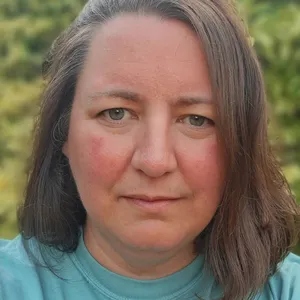
Jenny Whilde, adjunct research scientist at the University of Florida, explains how.
Faculty Bio:
Dr. Jenny Whilde holds a PhD in Animal Behavior, focusing on social group dynamics in zoo-housed animals, including elephants and orangutans. She has many years of experience in scientific writing, editing, and proofreading across a broad range of disciplines including cancer research, marine biology, and behavioral ecology and has contributed significantly to scientific publications, successful grant applications, and mainstream media articles.
Transcript:
Ireland is a land of storytellers, and it’s not just the people. The rivers, too, have stories to tell. In fact, a single water sample can be used to identify every living thing that has been in the area, including wildlife, humans, and even the pathogens that impact them.The key that unlocks this information is environmental DNA, or eDNA for short. This is DNA that any living organism has shed into its surroundings. It can come from skin cells, pollen, waste matter, even a cough or a sneeze. eDNA that is filtered from a water sample provides a snapshot of exactly what is living in and around the water. Typically, researchers use an approach called metabarcoding to decode eDNA. This is a powerful method if you are looking for a particular set of species, but it finds only what it is designed to find and ignores everything else.Our research team used a different technique, called long-read shotgun metagenomic DNA sequencing. This technique sequences all of the collected DNA from every species, from viruses to vertebrates and everything in between. Our team, led by Professor David Duffy, took water samples from different locations along the Avoca River, in Co. Wicklow, starting near its mountain source right through to where the river runs into the sea.The DNA we filtered from the water samples came from: the obvious, like ducks, sheep, and humans; the more elusive, like leatherback turtles and octopi at the river mouth, and from microscopic invertebrates and even viruses.We could identify the genetic origins of some species, and also found evidence of wastewater pollution. Within 24 hours, it is now possible to obtain a readout of all the eDNA in a water sample from any location, unlocking the secrets of an entire ecosystem.
Read More:
[The Conversation] - Fishing for DNA – how a cup of river water can reveal secrets about human health, pollution and biodiversity
[Oxford Academic] - Long-read nanopore shotgun metagenomic DNA sequencing for river biodiversity, wildlife, pollution, and environmental health monitoring
This is a public episode. If you would like to discuss this with other subscribers or get access to bonus episodes, visit www.academicminute.org