The Automation Journey | A Podcast from Rocrich AGV Solutions

Rocrich AGV Solutions

Details

Mobile automation is messy. Brownfield constraints. Finance is pushing back on ROI. Safety sign-offs. Departments that need actually to work together. The Automation Journey cuts through the noise and helps you make decisions that stick. Each episode tackles one fundamental question: Where do we even start? How do we build a business case that finance will believe? What does "safe by design" actually mean? How do we avoid vendor lock-in? Hosted by Rocrich AGV Solutions, a team that has implemented automation in some of the toughest manufacturing and logistics environments, the show shares lessons from practitioners, safety leaders, and integration professionals who’ve been there. The show is for operations and engineering leaders in manufacturing, logistics, food & beverage, and pharma - anyone who influences automation decisions, safety approvals, or budgets. You'll get clear first steps, plain-English safety and standards guidance, integration playbooks, and credible ROI framing you can actually use, plus actionable tools and industry updates to keep your plans on track.

Recent Episodes

OCT 1, 2026
How to Stress-Test Your Automation Business Case Before the Board Signs Off
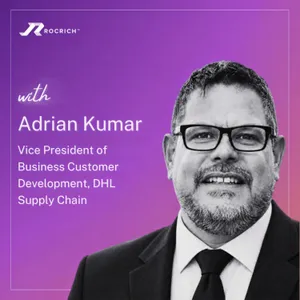
A former DHL executive who oversaw as many as 500 automation projects a year explains why so many warehouse automation business cases fall apart after go-live. You built the business case, got sign-off, and installed the system. Then the SKU mix shifts, peak volume spikes, and inventory accuracy falls apart, and suddenly the numbers don't add up. Adrian Kumar spent more than two decades at DHL in third-party logistics, designing and evaluating automation solutions across hundreds of projects a year. Now working independently, he brings a bias-free view of where mobile automation pays off and where it quietly fails. Listen and you'll get a practical checklist for evaluating any automation project: the vendor questions that expose weak business cases, the assumptions that get glossed over during solution design, and the operational realities that only show up after go-live. Adrian breaks down why some AGV and robotics investments scale successfully for years while others get ripped out after five. This episode covers due diligence for vendor selection, brownfield constraints, peak-volume stress testing, inventory accuracy, and the indirect labor costs automation vendors don't always mention. It's built for operations leaders preparing their first automation business case, not for anyone looking for a vendor sales pitch. ## Key Takeaways - One vendor question separates the honest suppliers from the ones overselling their technology, and it's not about their success stories. - Solution designs get built on ideal-case assumptions. Adrian explains which real-world variables (SKU mix, returns, non-conveyable items) blow those assumptions up on day one. - A major retailer invested tens of millions in a pick-to-belt system that got ripped out years later. The reason wasn't the technology, it was math nobody stress-tested upfront. - Peak volume planning isn't a formula. Adrian lays out when designing to peak makes sense and when leasing flexible capacity is the smarter play. ## Chapter Markers 00:00 Cold open: the risk of large automation write-offs 00:32 Guest introduction: Adrian Kumar's 3PL background 01:20 What the automation market gets wrong today 02:51 Why solution design assumes ideal conditions 05:13 Go-live surprises that expose bad assumptions 08:13 Cookie-cutter rollouts versus bespoke automation builds 10:35 How automation decisions changed over 20 years 12:53 Are automation success rates actually improving 15:31 Where customer assumptions go wrong upfront 18:08 Starting small before a big-bang investment 20:53 Lighthouse sites versus multi-site pilot testing 23:43 Where suppliers overstate achievable productivity 26:39 The vendor questions every customer should ask 30:24 Auditing automation performance years after go-live 34:41 The pick-to-belt system that got ripped out 36:13 Ergonomics and the human case for automation 38:13 Has brownfield-friendly automation caught up 40:43 Evaluating new mobile robot technology 43:14 Where automation wins are today: travel, pick, storage 46:06 How bad inventory data breaks automated systems 49:20 The assumption to stress-test before sign-off 51:50 Designing for peak volume versus staying flexible 54:51 The McDonald's lesson in balance and ergonomics 57:48 Closing thoughts: the vendor question that reveals honesty Useful Links & Resources Adrian Kumar on LinkedIn: https://www.linkedin.com/in/adriankumar/ Rocrich AGV Solutions: https://www.rocrich.com Connect With the Show LinkedIn: https://www.linkedin.com/company/rocrich/ Website: https://rocrich.com/contact/
60 MIN
OCT 1, 2026
How to Stress-Test Your Automation Business Case Before the Board Signs Off
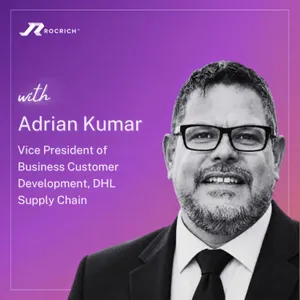
A former DHL executive who oversaw as many as 500 automation projects a year explains why so many warehouse automation business cases fall apart after go-live. Adrian Kumar spent more than two decades at DHL in third-party logistics, designing and evaluating automation solutions across hundreds of projects a year. Now working independently, he brings a bias-free view of where mobile automation pays off and where it quietly fails. Chapter Markers 00:00 Cold open: the risk of large automation write-offs 00:32 Guest introduction: Adrian Kumar's 3PL background 01:20 What the automation market gets wrong today 02:51 Why solution design assumes ideal conditions 05:13 Go-live surprises that expose bad assumptions 08:13 Cookie-cutter rollouts versus bespoke automation builds 10:35 How automation decisions changed over 20 years 12:53 Are automation success rates actually improving 15:31 Where customer assumptions go wrong upfront 18:08 Starting small before a big-bang investment 20:53 Lighthouse sites versus multi-site pilot testing 23:43 Where suppliers overstate achievable productivity 26:39 The vendor questions every customer should ask 30:24 Auditing automation performance years after go-live 34:41 The pick-to-belt system that got ripped out 36:13 Ergonomics and the human case for automation 38:13 Has brownfield-friendly automation caught up 40:43 Evaluating new mobile robot technology 43:14 Where automation wins are today: travel, pick, storage 46:06 How bad inventory data breaks automated systems 49:20 The assumption to stress-test before sign-off 51:50 Designing for peak volume versus staying flexible 54:51 The McDonald's lesson in balance and ergonomics 57:48 Closing thoughts: the vendor question that reveals honesty Useful Links & Resources Adrian Kumar on LinkedIn: https://www.linkedin.com/in/adriankumar/ Rocrich AGV Solutions: https://www.rocrich.com Connect With the Show LinkedIn: https://www.linkedin.com/company/rocrich/ Website: https://rocrich.com/contact/
60 MIN
SEP 3, 2026
How to Judge an Automation Vendor Before You Sign the Contract
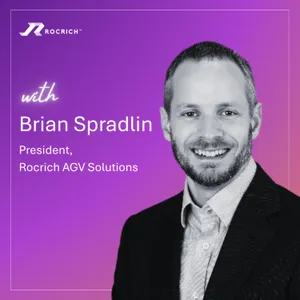
The robot is the easy part. What happens around it decides whether your automation project works or ends up gathering dust in the corner. You've seen it happen: a company buys the flashy AGV or AMR, it doesn't hit expectations, and within a year it's sitting unused while everyone blames "the technology." If you're weighing a warehouse automation investment and worried about repeating someone else's mistake, this one's for you. Brian Spradlin is President of Rocrich AGV Solutions, with two decades in automation and robotics including a run as Vice President of Global Product Development at KION Group. He also hosts this podcast, which means he's heard these lessons from the guest chair as often as the host's. Brian breaks down why the hardest part of automation was never the robot itself, and what actually separates a deployment that pays off from one that ends up switched off in a corner. You'll walk away knowing what questions to ask a vendor, what to demand in a service contract, and where the line sits between smart scope-cutting and a mistake you'll regret for years. Expect a conversation on how buyer behaviour has shifted from chasing shiny trade show demos to demanding real ecosystem thinking, where humanoid robots genuinely stand today, and what "invisible" project work actually looks like on the ground. This is for operations, supply chain and warehousing leaders evaluating automation vendors, not for anyone looking for a product pitch. Key Takeaways - The industry has moved past "should we automate" toward a harder question about long-term partnership, and Brian explains why that shift is protecting buyers from repeating old mistakes. - Humanoid robots draw the crowds at trade shows, but Brian lays out the cost, battery life and safety realities that put real commercial viability years away. - Systems fail at interfaces, not inside the robot itself. Brian explains why the software connections nobody demos are where most automation projects actually break. - Ask who picks up the phone at 2am before you sign anything. Brian shares exactly what to demand from a vendor's service and support contract, and why the answer often surprises buyers. Chapter Markers 00:00 Intro and the LinkedIn post that started it 02:33 Why customers now buy the ecosystem, not just the robot 04:56 Humanoid robots: hype or real solution? 09:09 What's actually interesting beyond the trade show floor 10:30 Sponsor break 10:55 The invisible work behind every automation project 12:50 Red flags in "easy deployment" marketing claims 14:46 Rebuilding trust after a failed automation attempt 17:42 What a proof of concept should look like in 2026 19:02 What to expect from a good automation vendor 21:11 The most underestimated parts of deployment 23:54 What keeps a system running at 2am 26:56 Sponsor break 27:26 Do you need the same technician who installed it? 30:10 Three takeaways for getting automation right 32:22 The tension between procurement and operations 35:08 Where the line is on cutting scope 38:36 Behind the scenes of The Automation Journey Useful Links & Resources Brian Spradlin on LinkedIn: https://www.linkedin.com/in/brian-spradlin-40450620/ Rocrich AGV Solutions: https://www.rocrich.com Connect With the Show LinkedIn: https://www.linkedin.com/company/rocrich/ Instagram: https://www.instagram.com/rocrich_solutions/ Website: https://www.rocrich.com Got a story about an automation project that went sideways, or one that worked better than expected? Tell us in the comments. We're curious how many of you have equipment sitting unused because the "invisible" work got skipped. Visit rocrich.com to learn how Rocrich AGV Solutions can help you start or scale your automation journey. #AutomationJourney #WarehouseAutomation #AGV #SupplyChain #ManufacturingAutomation
41 MIN
AUG 5, 2026
Manager of International Safety Standards: Why Listing Every AGV Standard on Your RFP Could Backfire
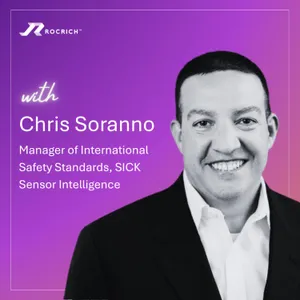
Mobile robot standards are multiplying faster than most operations teams can track them. Your RFP lists every AGV and AMR safety standard under the sun, but does anyone on your team actually know which ones apply, or why? Between ANSI B56.5, R15.08, ISO 3691-4 and the forthcoming ISO 26058, it's easy to end up compliant on paper and exposed in practice. Chris Soranno is Manager of International Safety Standards at SICK Sensor Intelligence and chairman of the ANSI Industrial Robot Subcommittee on Industrial Mobile Robot Safety. He's a TÜV Rheinland certified Functional Safety Expert, sits on ISO's committee revising ISO 11161, and was inducted into the ANSI B11 Standards Hall of Fame for his work on machinery safety standards. Few people alive can explain not just what these standards say, but why. This episode gives you a clear way to tell which standard applies to your AGV, AMR, or IMR deployment, and where the gray areas actually sit. Chris walks through the difference between North American and international approaches to responsibility, and why that distinction changes what your risk assessment needs to cover. You'll hear how R15.08 was built to close the gap between mobile bases and robotic arms, why B56.5 still governs anything with forks, and what's changing now that R15.08 Part 3 has finally been published for end users. Colin and Chris also cover robots-as-a-service, reprogramming AMRs on the fly, and the honest risks of using AI to interpret safety standards. This is for operations directors, safety leaders, and procurement managers writing their next automation RFP. If you've ever handed a vendor a checklist of standards without knowing why they're on it, this conversation is for you. Key Takeaways The real gray area in mobile automation safety often isn't the "what," it's the "who." North American and international standards assign responsibility to different stakeholders, and getting that wrong can leave gaps nobody's covering. Whether ANSI B56.5 or R15.08 applies to your AGV or AMR isn't always as simple as "does it have forks." Chris explains the nuance procurement teams miss when they just tick standards off an RFP checklist. Reprogramming a scanner or changing a payload on your AMR can quietly turn you from an end user into an integrator, with a completely different set of safety obligations you need to meet. Running a safety standard through AI to save time carries real risk. Chris has seen cases where the output doesn't match what the standard's authors actually intended, plus a copyright problem most people never consider. Useful Links & Resources Chris Soranno on LinkedIn: https://www.linkedin.com/in/chrissoranno-safetyjedi/ SICK Sensor Intelligence: https://www.sick.com ANSI (American National Standards Institute): https://www.ansi.org A3 Association for Advancing Automation (R15.08 standards body): https://www.automate.org Rocrich AGV Solutions: https://www.rocrich.com Connect With the Show LinkedIn: https://www.linkedin.com/company/rocrich/ Instagram: https://www.instagram.com/rocrich_solutions/ Website: https://www.rocrich.com Got a question about safety standards for your next mobile automation project? Send it our way, we're always looking for real-world scenarios to put to future guests. Know an operations director, safety leader, or procurement manager writing an RFP right now? Send them this episode before they hit publish. Visit rocrich.com to learn how Rocrich AGV Solutions can help you start or scale your automation journey. #TheAutomationJourney #WarehouseAutomation #AGV #MachinerySafety #ISO26058

52 MIN