
Innovators - The Digital Innovation Podcast
Sebastian Gier
Overview
Episodes
Recent Episodes
OCT 30, 2025
DDX x Doers Summit: Strategic Partnership with Dubai Silicon Oasis
Dubai, UAE - November 26-27, 2025

We’re excited to announce that DDX will join forces with the Doers Summit and our strategic partner Dubai Silicon Oasis (DSO) for a special collaboration during the Doers Summit Dubai, taking place November 26–27, 2025.
As part of the Summit’s second day, on November 27, DDX will host a series of exclusive sessions on design, innovation, and human-centered technology, gathering design leaders, founders, and innovators from across the globe.
This collaboration highlights our shared mission with DSO to advance creativity, innovation, and meaningful partnerships in one of the Middle East’s leading innovation ecosystems.
Here’s what you can expect from the Summit, and DDX’s role within it:
The Summit
The Doers Summit is a global event series that brings together ambitious entrepreneurs, investors, and industry leaders across Dubai, Limassol, and Athens.
The Dubai edition will feature 150+ speakers across multiple stages, 10+ side events, and curated matchmaking opportunities, gathering a global community of founders, investors, and changemakers.
Topics span across marketing, sustainability, proptech, product design, e-commerce, and technology, offering a 360° view of innovation in action.

The DDX Sessions - November 27, 2025
On the second day of the Summit, DDX will curate an exclusive track dedicated to Design & Innovation.
Through a mix of talks, panels, and fireside conversations, leading global voices will explore:
The future of human-centered innovation and AI, the role of design leadership in shaping sustainable futures, and how cross-disciplinary collaboration drives lasting impact. These sessions will take place at Dubai Silicon Oasis, a hub that embodies the UAE’s commitment to innovation, entrepreneurship, and technology-driven growth.
Shared Commitment
This partnership between DDX, Doers Summit, and Dubai Silicon Oasis represents a shared belief in the power of collaboration.
Together, we’re creating a platform where design meets innovation, technology meets creativity, and ideas turn into action.
About the Partners
Doers Summit
The flagship event by The Doers Company, connecting founders, investors, and operators who turn ideas into real impact.
Dubai Silicon Oasis (DSO)
Part of the Dubai Integrated Economic Zones Authority (DIEZ), DSO is a global center for innovation and entrepreneurship - home to tech companies, startups, and creative organizations shaping Dubai’s digital future.
DDX Conference
DDX is a global platform connecting design and innovation leaders from the world’s most forward-thinking brands. With events in San Diego, Tokyo, Munich, New York, London, and Dubai, DDX explores how design, technology, and human insight can drive meaningful change.
📅 Save the Date
DDX × Doers Summit Dubai
Design & Innovation Sessions — November 27, 2025
📍 Dubai Silicon Oasis
Learn More

-1 MIN
AUG 19, 2025
DDX & GxP - Strategic Partnership
Tokyo Conference and Exclusive Leadership Event
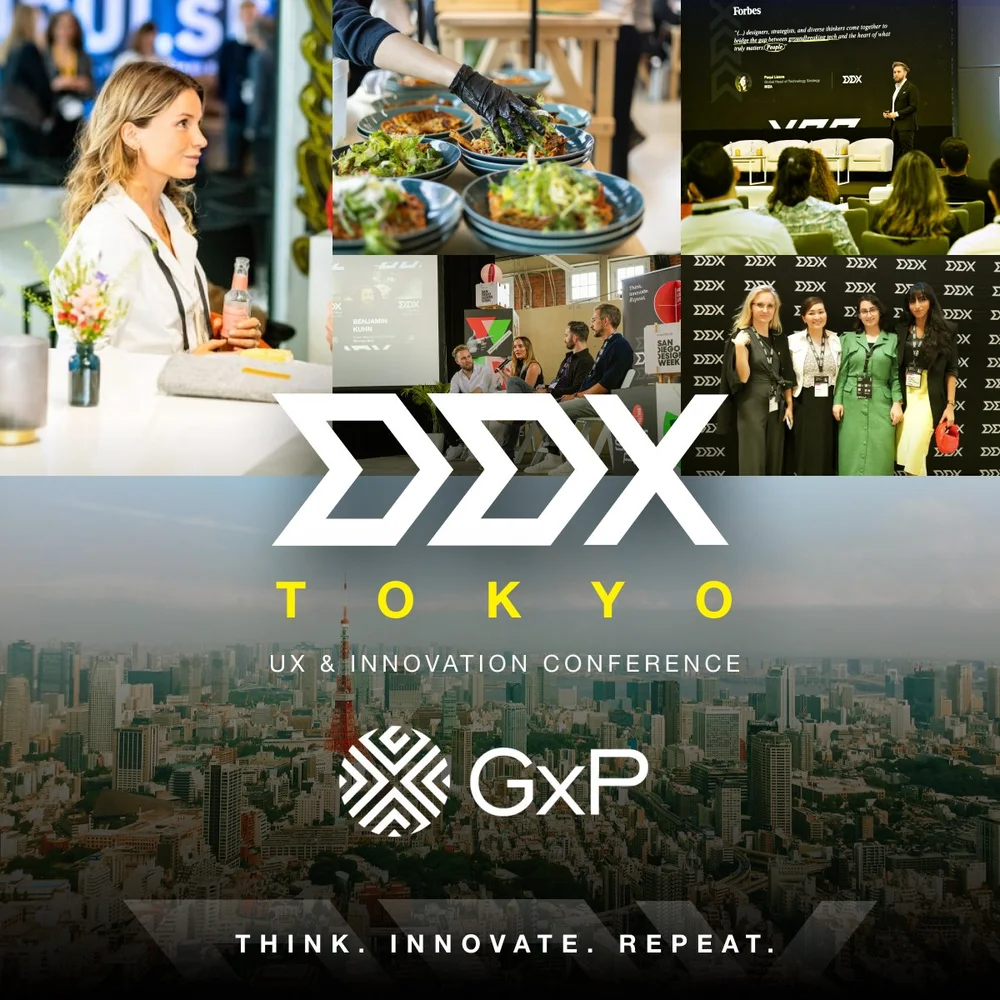
GxP and DDX are pleased to announce a strategic partnership to co-host a landmark conference on February 4, 2025, in Tokyo, for around 250 attendees, alongside an exclusive leadership event on February 3, 2025. This collaboration is designed to advance innovation and leadership in digital transformation by shifting industry mindsets toward a user-first approach.
The Conference - February 4, 2025
The Tokyo conference will bring together industry leaders, innovators, and decision-makers for a day of insightful discussions, cutting-edge presentations, and collaborative networking.
Many Japanese digital transformation companies currently operate with an engineer-first mindset, where engineering is viewed as the core of value creation. User experience (UX) often remains a downstream or cosmetic concern, with most budgets, authority, and visibility allocated to technical departments. Design and user research roles are frequently seen as supportive rather than essential.
This event will challenge these norms by exploring how prioritizing UX can transform business outcomes. Attendees will examine how leading global companies embed UX into their core strategies rather than treating it as an afterthought, and how the convergence of AI, UX, and product thinking drives meaningful innovation that enhances usability.
The Exclusive Leadership Event - February 3, 2025
The leadership forum will provide CEOs, board members, and senior managers an intimate space to engage in high-level discussions about leadership’s role in digital transformation.
It emphasizes that real change will not come through designers alone, but through leadership recognizing UX as a fundamental part of business strategy rather than a decorative element.
Shared Commitment
The partnership between GxP and DDX signals a shared commitment to fostering leadership that embraces a user-first mindset to accelerate innovation and growth in the digital transformation sector.
For more information and registration details, please visit ddxconference.com/tokyo.
About the Partners
Growth xPartners Incorporated
Growth xPartners Incorporated is listed on the Tokyo Stock Exchange Growth Market (Securities Code: 244A). The company is headquartered in the Shinjuku Nomura Building 48F, 1-26-2 Nishi-Shinjuku, Shinjuku-ku, Tokyo 163-0548. It was established on July 4, 2008, and is led by CEO Shinichi Watanabe. Its main focus is enterprise digital transformation (DX).
As a holding company leading the Growth Partner Group, GxP focuses on enterprise digital transformation through its core company, GxP, Inc. By combining the specialized expertise of group companies, it provides comprehensive DX support to client organizations, ranging from strategy and UI/UX to agile development, deployment, and operations.
GxP, Inc.
GxP, Inc. is a full-stack DX partner that supports enterprise clients through every stage of their transformation journey, from strategy and development to deployment, operation, and continuous innovation. With strengths in agile team development, cloud utilization, and UI/UX, its dedicated client teams provide customized technology support. The company also offers products and services to assist modernization and digital transformation initiatives.
Story: Theme of DDX Tokyo
The Change Must Start at the Top: Shifting from "Engineer-First" to "User-First" in Japanese DX Companies
The Current Reality
Many Japanese digital transformation companies still operate with an engineer-first mindset. Engineering is viewed as the core of value creation, while UX is often considered cosmetic or a downstream concern. Most budgets, authority, and visibility are allocated to technical departments, and design and user research roles are typically seen as supportive rather than essential.
DDX Tokyo: An Eye-Opening Experience for Leaders
DDX Tokyo is not a design lecture but a curated experience for CEOs, board members, and managers. It will demonstrate how prioritizing UX can transform business outcomes, how leading global companies integrate UX into their core strategies rather than treating it as an afterthought, and how the convergence of AI, UX, and product thinking drives innovation that enhances usability.
Real change will not occur through designers alone. It will come when leadership recognizes UX as a fundamental part of business strategy rather than just a decorative element.
Learn More
Get Ticket
-1 MIN